

A theme park can offer a rewarding day to visitors with disabilities, mobility limitations, sensory sensitivities and other access needs, but accessible does not mean that every attraction will suit every guest. Physical routes, ride-transfer requirements, restraint designs, queue accommodations, seating for shows and communication support can all differ within the same destination. Planning works best when it starts with the individual person’s priorities rather than a generic claim that a park is ‘wheelchair friendly.’ This guide explains what to check, the questions worth asking and how to build a day without making assumptions about anyone’s abilities.
Start with the official accessibility guide
Most large parks publish an access guide, frequently in PDF or a dedicated web section. Look for the version corresponding to your park and travel dates; two resorts owned by the same company may use different processes. A good guide should explain entrance routes, attraction-specific access, transfer methods, evacuation requirements and support services. It may also provide ride warning information and a process for requesting reasonable queue accommodations. Save a copy before travel, but ask the park for current instructions because access programs and ride procedures can change.
| What to check | Why it matters | Helpful question |
|---|---|---|
| Step-free travel | Not all routes are equally direct | Is there an accessible alternative to stairs or steep paths? |
| Ride entry and transfer | Some attractions require a transfer from a mobility aid | Can the guest board independently, with assistance, or in their chair? |
| Restraint systems | Seat design and safety requirements vary | Are dimensions and boarding positions described before queueing? |
| Queue accommodations | Programs depend on the operator’s policy | What process applies, and how is it requested? |
| Sensory features | Darkness, flashing lights and loud audio can be significant | Is there an attraction-by-attraction sensory guide? |
| Show access | Wheelchair seating and captioning may be limited | Are seats or assistance devices reserved in advance? |
| Quiet and rest areas | Fatigue and stimulation may affect the day | Where can we take a break without leaving the park? |
| Transportation | Shuttles, trams and hotels use separate policies | Are vehicles and boarding areas accessible for this guest? |
Wheelchairs, scooters and mobility aids
The term ‘accessible ride’ can describe several very different situations. One attraction may allow a guest to remain in a wheelchair, another may require transfer into a ride vehicle, and another may require walking a short distance or holding a body position that is not possible for every rider. An accessible entrance does not guarantee that the ride itself can be used safely. Ask about the actual boarding process, not just whether the venue meets general access rules.
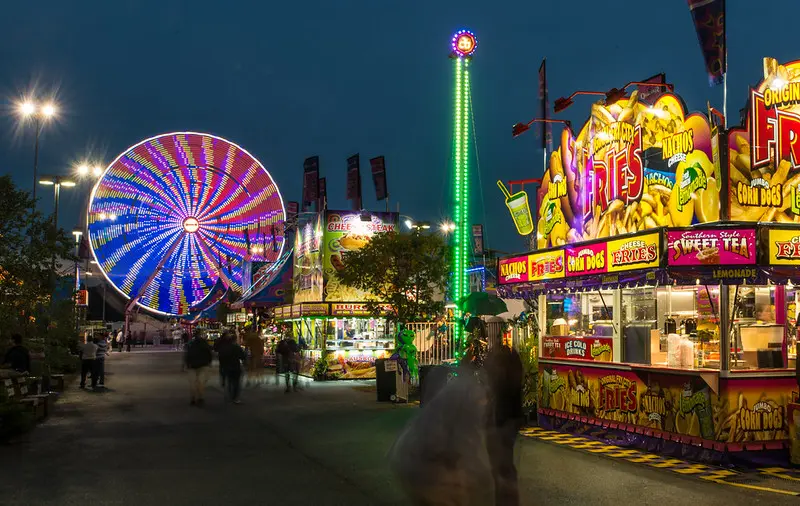
Wheelchair users should check surface gradients, distance between major areas, restroom locations and whether the park offers compatible rental devices. A rented scooter may help with the distance but still not fit a particular queue or ride entry. Some attractions prohibit taking the mobility device into the loading station, requiring a designated parking or handoff procedure. Do not count on staff physically lifting a guest; many operators prohibit this for safety reasons. The visitor and their companions should understand exactly what assistance is allowed and what must be performed independently.
Large parks such as Europa-Park and Disney’s sprawling Florida resort can involve considerable travel between lands. A compact park is not necessarily easy if it has steep slopes, narrow paths or crowds. Prague Zoo, for example, has notable changes in elevation; a zoo visit and a ride-focused day present different mobility challenges. Use the map to choose a route that avoids unnecessary backtracking, not merely one that connects the highest number of attractions.
Understanding accessible queues and priority programs
A queue accommodation is not automatically a front-of-line pass. Some parks offer a return-time arrangement, alternative entry point or an assistance system intended for specific functional barriers. Eligibility, registration and supporting information can vary by country and operator. Walt Disney World, Disneyland Paris, Universal Orlando and other resorts operate different programs with distinct terminology and rules. Do not buy a commercial express pass in the belief that it replaces a disability accommodation, or assume a disability access program includes entry to every ride regardless of its safety requirements.
If a process involves advance registration, handle it through the operator’s official service. If personal information is required, provide it directly to the authorized platform and avoid unofficial brokers claiming they can guarantee access. The goal of asking for an accommodation should be to explain the barrier created by the conventional queue and to understand the available alternatives, not to prove a diagnosis to bystanders. Park employees may have safety duties that limit what they can offer, and an access conversation works best when conducted calmly at guest services or through the designated booking channel.
Sensory sensitivities and neurodivergent visitors
Theme parks concentrate sounds, movement, unusual lighting, aromas, crowds and visual surprises. Some guests enjoy this intensity; others find it overwhelming. Attractions described as gentle can still include sudden darkness, projections, smoke effects or loud music. Look for sensory information by attraction, not simply general claims about inclusion. A dark ride may be physically gentle but emotionally challenging, while an outdoor show may allow an easy exit but have very loud audio.
A useful plan includes quieter periods, rest areas and a known place to leave when the park becomes too busy. Children and adults who use visual schedules may benefit from seeing the order of activities and knowing what could change if a ride closes. Noise-reducing headphones may help some visitors, subject to individual needs and ride safety policies. Be prepared to leave a queue if an experience becomes unsuitable. No one should be pressured to complete an attraction solely because admission has been paid.
Some parks provide quiet spaces, sensory guides or information about captioning and assistive listening. Monterey Bay Aquarium publishes sensory maps; other parks provide downloadable guides or guest-relations support. Availability is uneven, and a quiet space may be closed or occupied on a particular day. An alternative plan, such as a shaded outdoor area or a nearby hotel break, reduces reliance on one facility.
Hearing, vision and communication access
Visitors with hearing differences should investigate captioning for shows, assistive listening devices, interpretation arrangements and whether safety instructions are given visually as well as over speakers. For visitors with vision impairments, audio description, tactile maps, staff assistance and predictable pathways may be relevant. Parks are not uniform in what they provide, and services can require advance booking or collection from a guest-services desk.
When arranging accommodations for a family member, let the person describe what helps them whenever possible. A visitor who is hard of hearing may need clear written instructions but not a special queue arrangement. Someone with low vision may want staff guidance on an unfamiliar route without assistance boarding a ride. Avoid assuming that one disability always implies another, and do not treat a person as a spectator when an accessible activity may be possible with the correct preparation.
Ride restraints, health conditions and safety decisions
Height limits are only the most visible part of ride eligibility. Attractions may also have restrictions related to the ability to maintain a particular seated position, hold a handrail, evacuate, withstand forces or use the supplied restraint. Riders should read warning signs and consult the park’s official guidance, especially if a condition could be affected by rapid acceleration, sudden motion or intense light. This article cannot establish whether a particular ride is medically appropriate for an individual. For personal health questions, seek advice from a qualified clinician and ask the operator for exact ride conditions.
Some rides provide test seats, allowing a person to check fit before investing in a long queue. The presence of a test seat does not promise boarding, as the final safety check occurs at the attraction. Similarly, an assistive device may be accepted in a pedestrian area but not during a ride. There is no benefit in arguing with staff about a safety restraint that cannot close correctly. Identify alternative experiences that the guest can enjoy fully, including shows, gardens, accessible boat rides or interactive exhibitions.
Children, companions and family planning
For parents of a child with additional needs, build a day around two or three meaningful experiences rather than trying to match the pace of another family. Look at changing facilities, food options, medical supply policies and the possibility of re-entry. Some venues have adult changing facilities or other specialized amenities; others do not. If a medication or medical device must be carried, check security rules and whether storage conditions are available. Avoid leaving essential supplies in a vehicle that may be far from the entrance.
Companions should understand which attractions are realistic for the entire group and how to split up without isolating anyone. Where rider switch is offered, it may allow adults to enjoy a height-restricted ride while another adult stays with a child, but this is different from a disability queue accommodation. Agree on meeting points and an exit plan. The best day is one where the guest whose needs are being considered has genuine choices and enough energy to enjoy them.
Hotels, parking and the journey to the gate
Park accessibility does not solve the entire journey. An accessible hotel room may be available without an accessible shuttle, or a nominally short walk may include slopes and busy road crossings. Confirm room features with the accommodation directly, including shower type, door widths or equipment if relevant. A generic booking-site accessibility label often does not provide enough detail. At the venue, ask about accessible parking requirements, drop-off areas and the most direct route to guest services.
For public transportation, consider elevators, station exits and alternative service if a lift fails. The route from the nearest train station can be the most difficult part of an otherwise accessible attraction. In a multi-day resort, minimize unnecessary park hopping, build in rest and review whether the resort’s internal transportation serves the visitor’s specific mobility equipment.
An accessible day plan that leaves room for change
Start with arrival and guest-services tasks rather than treating them as an inconvenience to handle after joining the first ride queue. Complete any required registration, check current attraction access and note planned closure times. Begin with the highest-priority suitable experience while energy is good. Follow it with a less demanding activity, then take a real break. Keep the afternoon flexible for favorite experiences, shows or leaving early.
A change in weather, equipment availability or ride operation can affect anyone, but it may create more barriers when accessible alternatives are limited. Identify two substitute activities in advance. Carry only equipment you can manage safely, and use the park’s official emergency and first-aid contacts when necessary. Staff assistance can be valuable; communicate needs clearly and verify arrangements rather than assuming everyone on site has been briefed.
Frequently asked questions
Does an accessibility pass let me skip every ride queue?
No. Programs vary, may use return times or alternative procedures, and do not remove ride safety requirements. Consult the specific park’s current access policy.
Are all rides usable by wheelchair users?
No. Some provide wheelchair-accessible vehicles, some require transfers and some have additional evacuation or restraint requirements. Review individual rides with the operator before queuing.
Can I request accommodations without sharing my medical history publicly?
Operators have their own assessment processes. Use their authorized accessibility service and ask what functional information is needed and how it is handled privately.
Is a park’s general accessibility statement enough to book a visit?
Not for a visitor with specific requirements. Confirm relevant transport, hotel features, attraction entry, restrooms and other critical services directly with the venue.
More destination guides
Continue exploring specific parks and attractions: Magic Kingdom Guide: Best Rides, One-Day Plan, Tickets and Family Tips, Efteling Guide: Danse Macabre, Baron 1898, Symbolica and One-Day Plan, San Diego Zoo Guide: Giant Pandas, Africa Rocks and a Realistic One-Day Plan, Monterey Bay Aquarium Guide: Sea Otters, Kelp Forest, Open Sea and Visit Tips.
Official visitor resources
Last updated: October 14, 2026. Check the official park website for date-specific prices, schedules, ride operations and accessibility rules.