

The world’s most interesting aquariums do far more than display fish behind glass. Some recreate kelp forests and cold-water ecosystems; others use vast open-ocean tanks to introduce the extraordinary scale of marine life; still others put conservation, research and children’s learning at the center of the visit. The best choice depends on what you hope to see and whether you want a short family attraction or a place to spend most of a day. This guide compares major aquariums by experience, highlights animal-welfare questions and offers practical advice on tickets and visiting with children.
Aquariums worth comparing
| Aquarium | Destination | What sets it apart |
|---|---|---|
| Monterey Bay Aquarium | California, USA | Sea otters, kelp forest and Pacific ecosystems |
| Georgia Aquarium | Atlanta, USA | Ocean Voyager and large marine habitats |
| Okinawa Churaumi Aquarium | Okinawa, Japan | Kuroshio Sea tank and regional marine life |
| Osaka Aquarium Kaiyukan | Osaka, Japan | Pacific Rim habitats and whale sharks |
| Oceanogràfic | Valencia, Spain | Large habitat complexes within the City of Arts and Sciences |
| Nausicaá | Boulogne-sur-Mer, France | Open-ocean conservation themes and vast displays |
| Lisbon Oceanarium | Lisbon, Portugal | Central ocean tank and balanced ecosystem displays |
| Singapore Oceanarium | Sentosa, Singapore | Immersive marine exhibits and conservation interpretation |
| Aquarium of the Pacific | Long Beach, USA | Pacific habitats, sea otters and education |
| Two Oceans Aquarium | Cape Town, South Africa | Kelp forests, sharks and southern African marine life |
Monterey Bay Aquarium: watch a living coastal ecosystem
Monterey Bay Aquarium stands out because many exhibits explain the ecology of a real place. Its Kelp Forest rises through a tall underwater display, while sea otter habitats, Open Sea and Into the Deep reveal dramatically different parts of the Pacific. The official exhibition guide describes sea otters, sardines, jellies, sharks, coastal birds and fascinating deep-sea animals. Rather than rushing from one famous animal to the next, stay at a viewing window long enough to notice feeding behavior, currents and how different species occupy the same habitat.
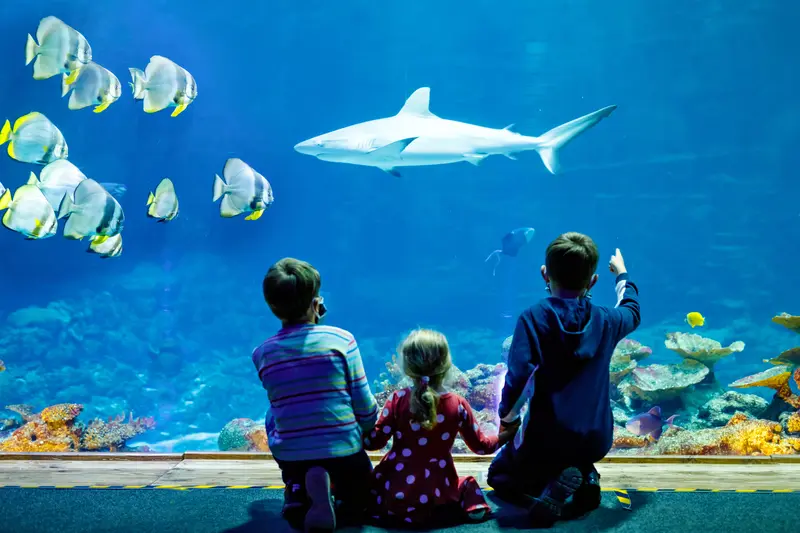
This aquarium fits well into a Monterey or Big Sur itinerary, but ticketing and parking in the Cannery Row area require planning. A family with young children may benefit from beginning with otters, then returning to slower galleries after a break. The institution offers sensory information and floor maps that can help visitors who need a predictable environment. Animal viewing cannot be guaranteed: an otter may be resting and a particular tank may be undergoing care, so build the day around the whole collection.
Georgia Aquarium and other North American highlights
Georgia Aquarium in downtown Atlanta is notable for its large Ocean Voyager environment, where whale sharks and other marine animals create a sense of scale rarely encountered in ordinary tanks. It attracts substantial interest, so examine timed-admission procedures, crowd patterns and presentation schedules before visiting. Marine animal presentations and encounters may come with separate terms, and a large aquarium should not be judged entirely by one marquee species. Use the smaller themed galleries to teach children that reef, river and colder-water ecosystems face different pressures.
Aquarium of the Pacific in Long Beach offers another Pacific-focused choice, especially useful on a Southern California vacation. New England Aquarium in Boston has a recognizable central ocean exhibit and city waterfront location. National Aquarium in Baltimore combines multiple immersive galleries and an Inner Harbor setting, while Shedd Aquarium in Chicago is a large urban destination. These are not all easy day trips from their nearest major theme park: combine one with the city where you are already staying rather than adding an expensive detour only to visit a second aquarium.
Japan: Osaka and Okinawa are not interchangeable
Osaka Aquarium Kaiyukan takes visitors through habitats linked to the Pacific Rim, with its central large tank serving as a visual anchor. It is accessible from Osaka’s bay area, making it possible to combine with waterfront activities. Osaka is also home to Universal Studios Japan, but seeing the aquarium and doing a full theme-park day back-to-back can be tiring. The aquarium is a particularly good alternative when someone in the group wants a calmer day without abandoning a family-focused itinerary.
Okinawa Churaumi Aquarium sits much farther south on Okinawa Island, where Kuroshio Sea and the surrounding ocean environment connect naturally to the region. This is not a quick train excursion from Tokyo or Osaka: visitors need to plan flights and ground transport. For a traveler already visiting Okinawa, the aquarium fits a wider exploration of beaches, coastal landscapes and local marine conservation. The regional context is part of the attraction, and allowing time outside the tanks makes the journey more worthwhile.
Spain, Portugal and France: European aquariums with distinct personalities
Oceanogràfic in Valencia occupies the City of Arts and Sciences complex. Its different habitats and substantial grounds reward a leisurely visit, and walking between areas is part of the experience. The official aquarium promotes a large underwater tunnel and beluga exhibits, but not every live-animal presentation should be treated as a guaranteed show. For a family holiday in Valencia, pairing Oceanogràfic with one other City of Arts and Sciences activity on a separate day can be more comfortable than buying an overambitious combination ticket.
Lisbon Oceanarium uses a central tank and surrounding displays to connect species and ocean ecosystems. It is convenient to incorporate into a Parque das Nações day, where the cable car, riverside setting and other attractions create options for different ages. Nausicaá in Boulogne-sur-Mer, northern France, has a strong open-ocean focus and large display spaces, making it an attraction worth considering during a northern France itinerary. Barcelona Aquarium provides a different urban option close to the old port; travelers should decide whether they want a large specialist visit or a compact attraction that complements a city day.
Singapore and the rest of Asia
Singapore Oceanarium on Sentosa Island is a major marine attraction, but it is not the same ticket as Universal Studios Singapore or Adventure Cove Waterpark. Some visitors remember its previous branding and assume old attraction maps and packages are still valid. Use current official ticket names, permitted entry windows and experience descriptions. Sentosa is relatively easy to reach from the city, yet a family should not assume that a full oceanarium visit plus two other paid venues will be enjoyable in one day.
Lotte World Aquarium in Seoul, SEA LIFE COEX in Seoul and Port of Nagoya Public Aquarium in Japan offer different ways to build an aquarium into a large city vacation. Port of Nagoya’s multiple buildings and scheduled activities deserve a closer look at the map; Lotte World Aquarium’s commercial complex location makes it convenient for a city day. Not all aquariums offering dolphins, sea lions or other mammals should be evaluated only by a show timetable. Research the institution’s animal-care approach, education and conservation commitments before deciding what kind of visit you want to support.
Other marine destinations: South Africa, Australia and beyond
Two Oceans Aquarium in Cape Town emphasizes the meeting of two marine regions and provides an introduction to kelp forests and local species. It can complement the city’s coastal scenery, and the exhibit themes offer useful context before a nature-focused day trip. In Australia, SEA LIFE Sydney Aquarium and AQWA in Perth have distinct local marine stories, while Cairns Aquarium explores the varied environments of tropical North Queensland. These places are strongest when paired with a real interest in their ecosystems rather than approached as interchangeable rainy-day backups.
In many coastal regions, responsible snorkeling or a boat trip may be another way to learn about marine life, but an aquarium visit is more predictable for travelers with limited mobility, small children or no experience in open water. It also avoids suggesting that animals in the wild can be seen on demand. Compare conditions and safety requirements if you are deciding between a marine facility and an outdoor activity.
Animal welfare and conservation: questions worth asking
Aquarium standards deserve the same scrutiny as zoo standards. Check whether a facility publishes information about animal care, veterinary oversight, enrichment, research or rescue work. AZA accreditation in North America and the conservation guidance published by WAZA can provide useful starting points for research. Accreditation does not erase every ethical disagreement about keeping marine mammals or large pelagic fish in captivity, and a stunning tank does not answer every welfare question. Visitors may reasonably disagree about particular practices.
Be especially skeptical of promises of guaranteed touching, feeding or swimming with animals without clear information about supervision and animal choice. If an experience makes you uncomfortable, you can choose to skip it while still enjoying the educational galleries. Responsible visitor behavior matters too: obey flash-photography restrictions, keep noise down at sensitive exhibits and never tap on glass or feed animals without explicit staff instruction.
How to plan an aquarium visit with children
A good aquarium day balances large exhibits with focused discoveries. Younger children often learn more by watching one animal for several minutes than by walking past hundreds of tanks in a hurry. Give them simple questions: how does this animal move, where does it hide, and what kind of water does it live in? Older children can explore food webs, coral stress, plastic pollution and differences between deep-sea and shallow coastal ecosystems.
Aquariums can be loud, dark or crowded, especially around popular tunnels and presentations. For guests with sensory sensitivities, consult official maps, quiet-room information and off-peak admission options. Strollers and wheelchairs may need elevator routes that differ from the main visitor flow. Allow two to four hours for many city aquariums and longer for the largest complexes, but let the visitor’s pace decide. An hour spent watching a kelp forest can be more memorable than squeezing every gallery into the schedule.
Tickets, transport and booking mistakes
Before buying a combination ticket, decide whether you genuinely have enough time for its second attraction. Confirm whether entry is dated or timed, whether an adult must accompany a child and whether special encounters or behind-the-scenes tours cost extra. Aquariums inside large commercial districts may be convenient by metro, while others have parking limitations or longer suburban transfers. Accessibility information should be checked for each venue independently, not assumed from a city’s general tourist guidance.
Plan a meal outside the busiest visit period if your venue allows convenient re-entry or has food facilities; rules differ. Save official confirmations securely and check whether the barcode must be presented in a particular app. Finally, treat the animal list as an indication of what the institution cares for, not a promise that every individual animal will be visible during your visit.
Frequently asked questions
Which aquarium is best for whale sharks?
Georgia Aquarium, Osaka Aquarium Kaiyukan and Okinawa Churaumi Aquarium are prominent places to research. Exhibits and animal availability can change; consult their current official pages.
Which aquarium is best for children?
Monterey Bay Aquarium, Aquarium of the Pacific, Lisbon Oceanarium and many other institutions have excellent family appeal. Choose one near your travel route, with accessible exhibits and practical rest opportunities.
Is an aquarium visit worth a full day?
Large aquariums such as Oceanogràfic or extensive facilities with multiple galleries can fill much of a day. Smaller urban aquariums may fit comfortably into two or three hours.
How do I choose a responsible aquarium?
Look beyond spectacle to published welfare practices, reputable accreditation, conservation and rescue work, clear encounter policies and meaningful education about habitats.
More destination guides
Continue exploring specific parks and attractions: Monterey Bay Aquarium Guide: Sea Otters, Kelp Forest, Open Sea and Visit Tips, Georgia Aquarium Guide: Whale Sharks, Dolphins, Belugas and One-Day Plan, Oceanogràfic Valencia Guide: Sharks, Belugas, Underwater Tunnel and Visit Tips, Okinawa Churaumi Aquarium Guide: Whale Sharks, Kuroshio Sea and Visit Tips.
Official visitor resources
Last updated: October 14, 2026. Check the official park website for date-specific prices, schedules, ride operations and accessibility rules.