At a glance: Look beyond attractive exhibits: assess independent standards, species-appropriate habitats, conservation projects, welfare safeguards and the ethics of paid animal encounters.
On this page
The five questions to ask before buying tickets · What accreditation actually tells you · Welfare means more than attractive enclosures · Conservation: distinguish a programme from a slogan · Animal encounters and performances deserve special attention · Safari parks and drive-through experiences · Choosing aquariums responsibly · How to research a facility before your trip · Make the visit educational without making it a lecture · What visitors can do to support better standards · Frequently asked questions
A zoo or aquarium can inspire curiosity about wildlife, give families access to educational experiences and contribute to species conservation. It can also raise difficult questions about captivity, animal welfare, breeding, public encounters and the relationship between entertainment and conservation. Visitors should not have to accept either extreme claim that every institution is beneficial or that every institution operates in the same way. A more useful approach is to evaluate the particular facility, its practices and the evidence it makes available.
This guide explains what to look for before buying tickets, how reputable accreditation systems work and which visitor experiences deserve extra scrutiny. It applies to traditional zoos, wildlife parks, marine aquariums, safari parks and mixed attractions. The goal is not to produce an unverified ranking of ethical institutions; it is to help you ask better questions and reward operators that can demonstrate serious animal-care and conservation work.
The five questions to ask before buying tickets
| Question | What useful evidence looks like |
|---|---|
| Who evaluates animal care? | Current accreditation from a relevant, independent professional body |
| What are the animals’ living conditions? | Clear information about habitat design, choice, retreat areas and enrichment |
| What conservation work is supported? | Specific projects, partners, activities and transparent reporting |
| What happens during public encounters? | Animal choice, welfare safeguards, trained staff and clear restrictions |
| Is the education credible? | Accurate species information and honest discussion of threats and conservation needs |
No single positive answer proves an institution is exemplary. A respected accreditation is meaningful evidence, but visitors should still look at current practice, public reporting and the welfare implications of the activities being sold. Conversely, the absence of membership in one particular national association does not automatically establish that a foreign institution is unethical; standards and governing bodies vary across regions.

What accreditation actually tells you
Professional accreditation is more substantial than a marketing badge when the scheme involves independent assessment, documented standards and recurring reviews. The Association of Zoos and Aquariums (AZA), for example, describes a detailed process covering animal welfare, veterinary care, conservation, education, safety and institutional operations. Its accreditation involves applications and on-site inspection by experienced professionals.
In Europe and other regions, different professional organisations and national systems may be relevant. The World Association of Zoos and Aquariums (WAZA) publishes international animal-welfare strategies and represents a global professional network, but WAZA membership should not be treated as an identical certification to AZA accreditation. Before drawing conclusions, establish what the organisation actually evaluates and whether an individual facility’s status is current.
Look for the facility by name in the accreditor’s official directory, not just a logo on the attraction’s website. Consider whether accreditation has conditions, dates or a specific location scope. A large corporate group may operate several facilities with different recognition. A positive status is a useful starting point for research, not permission to stop asking questions.
Welfare means more than attractive enclosures
Landscaped habitats can look impressive to human visitors without meeting every welfare need. Consider whether the design allows animals to withdraw from view, use appropriate social groupings, choose different environmental conditions and engage in species-relevant behaviour. An excellent exhibit is not necessarily the one that provides an unobstructed photograph at every moment. If an animal can choose to remain out of sight, that may reflect an important aspect of its welfare.
Enrichment can include varied feeding methods, complex habitats, training for voluntary veterinary procedures and opportunities for exploration. The details differ greatly by species. A penguin, giraffe, octopus and big cat cannot be assessed by the same simplistic checklist. Look for communication that explains animal care in specific terms rather than claims that every resident is ‘happy’ because its enclosure is colourful.
Good welfare also requires ongoing monitoring, suitable nutrition, veterinary services, knowledgeable keepers and a willingness to change practices. Some of the most important work happens away from public view. Visitor-facing exhibits are evidence to consider, but reliable assessment depends on deeper management systems than a tourist can judge in one afternoon.
Conservation: distinguish a programme from a slogan
A zoo that claims to ‘save wildlife’ should be able to explain what it does, how and with whom. Credible examples can include contributions to managed breeding programmes, scientific research, habitat restoration, support for field conservation partners, public education and rehabilitation where appropriate. No one intervention is suitable for every species, and a breeding programme does not necessarily imply that individual animals will be released into the wild.
Ask whether the institution identifies specific conservation partners and publishes accessible updates or reports. A general statement that a portion of ticket sales helps nature is weaker than a description of projects, methods and outcomes. Conservation work can be complicated and slow; serious organisations may acknowledge setbacks and uncertainty rather than presenting every project as an instant success.
Visiting an aquarium can support research and education as well as public entertainment, but these missions require scrutiny. Look for explanations of sustainable collection policies, veterinary practice, species protection and marine habitat research. Aquarium size or the presence of a famous animal is not, on its own, proof of stronger conservation value.
Animal encounters and performances deserve special attention
Not all visitor interactions are equal. A supervised educational talk viewed from a respectful distance poses different welfare questions from a paid opportunity to hold, ride or pose closely with an animal. Ask whether animals have the ability to withdraw, whether interactions are limited and monitored, and whether the experience encourages natural or trained cooperative behaviours rather than coercive ones.
Particular caution is justified around attractions advertising constant hands-on access to wild animals, forced photo opportunities or close contact with dangerous species. Consider the impact of repeated sessions on the animal as well as public health and safety. Avoid buying an encounter simply because it provides the most dramatic image. A memorable wildlife observation can be meaningful even without physical contact.
Marine-animal presentations are especially debated. Different visitors and experts may disagree about particular practices or the appropriateness of keeping certain species under human care. Evaluate the individual facility’s animal-welfare standards, educational purpose, breeding policy, transparency and independent oversight rather than assuming that the label ‘show’ or ‘encounter’ settles every question.
Safari parks and drive-through experiences
Drive-through safari parks can offer expansive viewing environments, but acreage alone is not an adequate indicator of care. Research the species involved, traffic controls, animal management and restrictions on feeding or opening windows. Follow the park’s rules strictly; they protect both visitors and animals. An animal approaching a vehicle does not mean touching or feeding it is appropriate.
Some safari parks provide guided transport that may be more suitable than driving your own car, particularly for visitors unfamiliar with wildlife behaviour or restrictions. Ask how tours are organised, how keepers monitor the animals and whether vehicles can cause stress. If the operator encourages reckless close approaches or unregulated feeding, consider a different destination.
Walking wildlife parks also require respectful behaviour. Keep to designated paths, supervise children, do not tap on glass or barriers and never use flash photography when prohibited. Respecting the animal’s space is part of an ethical visit, not merely a courtesy to other guests.
Choosing aquariums responsibly
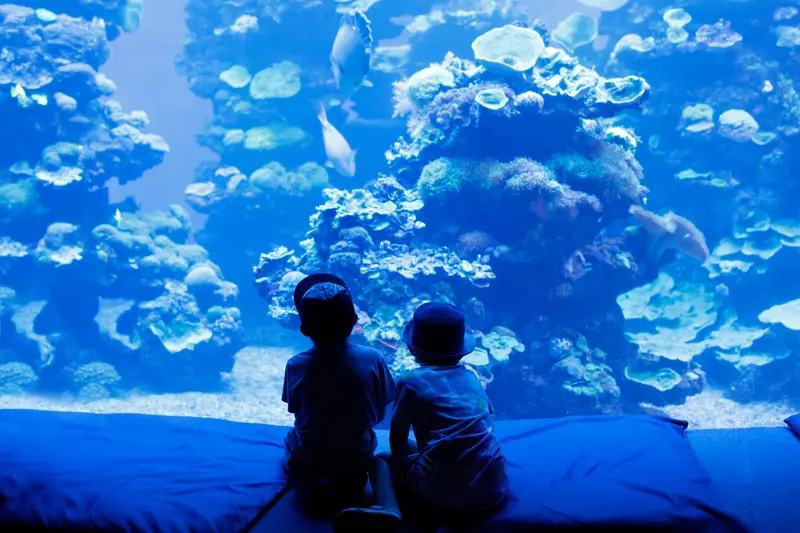
Aquariums can be valuable environments for learning about aquatic ecosystems, but it is worth examining the provenance and care of their animals. Research species-specific habitat needs, water-quality management, rescue or rehabilitation work and any information about collection policies. Large tanks can create striking photographs while still leaving unanswered questions about individual animal needs.
Marine conservation interpretation should go beyond naming species. Strong exhibits help visitors understand overfishing, habitat damage, warming seas, pollution and the role of conservation initiatives. Practical education may include responsible seafood choices, waste reduction and local habitat protection, provided claims are specific and properly supported.
For wildlife rescue centres, do not assume every animal can be released. Some individuals are non-releasable because of injury or circumstances. A reputable institution should be transparent about that distinction and careful not to present permanent captivity as a rehabilitation success when no release is intended.
How to research a facility before your trip
Start with the official website, then identify independent professional bodies, current inspection or accreditation information and recent organisational reporting. Read more than promotional reviews. Visitor comments can provide clues about closed exhibits, staff communication and facilities, but an individual observation rarely establishes the full welfare condition of an animal or institution.
Look at the educational material available online: species descriptions, conservation projects, husbandry explanations and information about unusual animal encounters. If you find a troubling practice, ask the facility to explain it. A serious operator should be able to provide clear, grounded information, although not every operational detail can be public for security or veterinary reasons.
Review the practical visitor experience too. Families need accessible paths, appropriate restrooms, shaded rest areas and sensible animal-viewing expectations. An ethically managed facility can still be a poor fit for a particular family’s time, mobility or budget. There is no obligation to visit an attraction simply because it is famous.
Make the visit educational without making it a lecture
Children often remember a few species and moments of discovery better than a rushed tour of every enclosure. Before arrival, ask what animal or environment they want to learn about. During the visit, read a short exhibit sign together, observe behaviour quietly and let questions emerge naturally. If an animal is not visible, explain that animals may choose to rest or remain out of sight.
Keeper talks can be useful if they explain behaviour, habitat needs and conservation accurately. Encourage respectful questions and avoid suggesting that every animal must perform for an audience. A peaceful encounter with a species in a well-designed habitat can be more memorable than a crowded photo opportunity.
After the trip, connect the experience to something practical: a library book about the species, a responsible local conservation initiative or a family discussion about how ecosystems are protected. Educational value should outlast the ticket scan, but it does not have to involve an elaborate homework assignment.
What visitors can do to support better standards
Spend with informed intention. Prioritise institutions that can substantiate their animal-care and conservation claims and reconsider paid interactions that place entertainment ahead of welfare. Respect every rule about feeding, touching, flash photography and barriers. If you notice something concerning, report it to appropriate staff with factual details rather than confronting other visitors or posting an unsupported claim as a certainty.
Be cautious about sharing sensational wildlife photographs without context. A picture of an animal lying still does not by itself establish illness or mistreatment, just as a playful-looking moment cannot prove welfare is excellent. Credible evidence often requires veterinary, behavioural and husbandry expertise. Support informed scrutiny, and be prepared to change your assessment when reliable new information becomes available.
A complete global theme-park holiday can include museums, botanical gardens, protected natural areas and responsible wildlife observations outside captivity. If a particular zoo or aquarium does not meet your expectations, there are other meaningful ways to learn about and support nature.
Frequently asked questions
Does accreditation prove that every animal is well cared for?
It is important evidence of assessed standards, but not a guarantee against every problem. Review the accreditor’s criteria, current status and the institution’s own practices.
Is WAZA membership the same as AZA accreditation?
No. The organisations have different roles and systems. Check the specific recognition claimed instead of treating all logos as equivalent certifications.
Are all animal encounters unethical?
No single label answers that question. Assess the animal’s ability to opt out, welfare safeguards, frequency of interaction, staff competence and the type of contact being offered.
Can a zoo contribute to conservation without breeding animals?
Yes. Field conservation, research, habitat projects, education and support for partner organisations can all be relevant, depending on the institution.
Is a large animal enclosure always better?
Size matters, but it is not the only consideration. Habitat complexity, welfare monitoring, species needs, social conditions and opportunities for choice are also important.
Related Visit Theme Parks guides
Explore these existing park guides: San Diego Zoo Guide: Giant Pandas, Africa Rocks and a Realistic One-Day Plan; Georgia Aquarium Guide: Whale Sharks, Dolphins, Belugas and One-Day Plan; San Diego Zoo Safari Park Guide: Elephant Valley, Africa Tram and One-Day Plan; Oceanogràfic Valencia Guide: Sharks, Belugas, Underwater Tunnel and Visit Tips; Monterey Bay Aquarium Guide: Sea Otters, Kelp Forest, Open Sea and Visit Tips.
Official sources and further verification
For current admission, safety rules, park services and policies, consult AZA accreditation standards and assessment; WAZA animal welfare strategy. Operator information takes precedence over general visitor advice.