
Independent theme park travel guidesDiscover more. Plan better. Enjoy every moment.
VisitThemeParks

Author: admin

  • How to Avoid Long Lines at Theme Parks: Smarter Strategies Without Overspending

    How to Avoid Long Lines at Theme Parks: Smarter Strategies Without Overspending

    At a glance: Arrive early when practical, choose two priority attractions, work through nearby areas and use official wait-time apps. Buy an express product only if it covers the rides you truly value.

    Long queues can turn an expensive theme-park day into an exhausting sequence of waiting, especially when you have only one visit planned. The solution is not always to buy the most expensive express product. Arrival time, park layout, meal timing, realistic priorities and your group’s tolerance for waiting can be just as important. The objective is to spend more of the day doing the things you value—not to collect the highest possible number of rides.

    Queue systems also differ greatly between operators. Walt Disney World, Disneyland, Universal, Europa-Park, Tokyo Disney Resort and regional parks have different apps, paid products and access rules. Any advice that promises one universal ‘fast pass’ solution is incomplete. Instead, use this flexible framework to build a plan that still works when a ride closes, the weather changes or the headline attraction develops a long line.

    Seven tactics that genuinely help

    Strategy Best use Common mistake
    Arrive early Popular attractions with high morning demand Turning up at advertised opening rather than before security and entry
    Pick two priorities Short visits and first-time guests Rushing across the park for every ride
    Check the app Current waits and showtimes Treating displayed times as guaranteed
    Group attractions by area Large parks and families Repeatedly crossing the park for small queue differences
    Eat at off-peak times Busy lunch and dinner periods Skipping meals until everyone is exhausted
    Use legitimate queue products selectively High-demand days or limited-time visits Assuming every ride is included
    Keep a backup plan Weather, temporary closures and technical downtime Waiting indefinitely beside one closed ride

    These tactics work together. Early arrival does little good if you spend the first hour choosing breakfast and checking where to go. A good plan makes the first two decisions before entering the gate, while leaving the rest of the day flexible.

    Illustration Of Children At Colorful Funfair

    The difference between rope drop and early entry

    ‘Rope drop’ is the informal term visitors use for entering a park around its public opening and heading efficiently to a chosen attraction. ‘Early entry’ is an operator benefit that may allow eligible hotel guests or other qualifying ticket holders access before regular opening. They are not the same thing. Early access can involve only some attractions or designated areas, and participation changes over time.

    For a normal opening, aim to reach parking, security or the entrance area well before the listed opening time, allowing for transport and screening. The exact margin depends on the park. A family travelling by bus, a group parking in a huge lot and a guest walking from a nearby hotel all face different entry times. Use the official app and resort transport guidance rather than copying an arbitrary minute-by-minute plan from a past trip.

    Choose one sensible first attraction. In a large park, the longest headline ride is not always the best first choice if everyone else has the same idea. Compare the location of your priorities and how quickly surrounding attractions fill. If the attraction opens late or already has a very long wait, pivot instead of letting one queue derail the first hour.

    Plan around geography, not just listed waiting times

    Large theme parks can require substantial walking. Moving from one end of a park to the other for a twenty-minute reduction in posted wait time may not save any time when you account for the walk, a restroom break and navigating crowds. Divide the park into two or three areas and work through nearby rides, shows and dining options before moving on.

    At Disney’s Animal Kingdom, for example, attractions and wildlife trails can reward a route that mixes active and slower experiences. At Islands of Adventure, a Harry Potter and Jurassic Park-focused morning may be more logical than chasing every queue fluctuation across the lagoon. At Europa-Park, the theme areas and the distribution of coasters also make routing important. Read the official map and keep the day’s path simple.

    A practical family rule is to choose one ‘anchor attraction’ per part of the day. If it is temporarily unavailable, visit a nearby lower-demand ride or show and try again later. You will remember an enjoyable area far more fondly than a day dominated by zigzagging to chase numerical wait-time improvements.

    Use live wait times intelligently

    Official apps can show estimated waits, show schedules, dining options and, at some resorts, digital queue eligibility. They are valuable, but they are estimates and operational information, not contracts. A thirty-minute posted wait can change as capacity varies. Technical faults, weather, priority queues and unloading needs may affect the actual time.

    Check trends rather than staring at the screen after every ride. A long queue at midday may fall during a parade or dinner period, but there is no guarantee. If an attraction displays a suspiciously short wait during a known busy hour, confirm that it is open and accepting guests before walking a long distance. Do not build an entire holiday on third-party historical charts; they may not reflect the current ride lineup or admission system.

    Families with children should set a maximum comfortable wait. The threshold will differ for a toddler, a teenager and an adult who enjoys the atmosphere of a detailed queue. For some groups, a beautifully themed forty-minute wait is preferable to a frantic cross-park sprint that ends in another queue.

    Should you buy an express pass?

    Paid priority access can make sense when your group has only one day, crowds are high and the included attractions match your must-do list. It may be poor value when the park is quiet, your companions cannot ride the included coasters or you plan to spend most of the day watching shows. Calculate cost per meaningful time saving, not cost per advertised ‘ride’.

    Read the precise operator rules. Some products are attraction-specific, some allow access once, some offer repeated access and some exclude individual headline attractions or have limited inventory. Hotel benefits can vary by property and ticket type. At Universal, verify which Express option applies to your ticket and parks. At Disney, consult the current Lightning Lane product details for the relevant location and dates rather than using the old FastPass name as if it were current policy.

    Never buy queue-jumping services from unofficial intermediaries who cannot explain how admission will be validated. A guaranteed no-wait claim is a warning sign. Even legitimate priority lines can involve short waits, and operational closures may be outside the seller’s control.

    Meals, shows and breaks are part of queue management

    Queue planning is easier when you stop thinking of meals as wasted time. A calm lunch during the busiest mid-afternoon period can be more efficient than chasing one additional attraction in high heat. Where an operator offers mobile ordering, study the process beforehand and select the collection window thoughtfully. Allergies and dietary requests require direct verification and should never be rushed simply to protect a ride schedule.

    Shows are often excellent queue alternatives because they have scheduled performances and can accommodate a larger audience, though popular performances may still fill. Put a show or indoor exhibit into the day as a planned recovery period. For families, this can prevent the late-afternoon collapse that sends everyone home before the evening entertainment they wanted to see.

    Take bathroom and water breaks proactively. If you are visiting in hot weather, a twenty-minute shaded rest may preserve the family’s energy for another three hours. Maximizing ride count at the expense of hydration, accessibility or comfort is not a useful saving.

    Single-rider lines, rider switch and group splitting

    Some attractions operate a single-rider line to fill otherwise unused seats. It can reduce waiting but may separate companions, bypass themed parts of the queue, or close without notice. Never assume a single-rider entrance exists at every coaster. Ask staff and check official ride information on the day.

    Rider-switch or child-swap procedures may help families when a child cannot or does not want to ride. The exact rules differ by resort and attraction. Before a parent queues, ask the operator how the eligible adults, waiting child and any accompanying family members are managed. Do not assume the second adult receives an immediate front-of-line admission or that every attraction handles the procedure identically.

    Splitting a group can also help if priorities differ. Two adults may enjoy a thrill attraction while others visit a nearby play area, but agree on a clear reunion point and time. Keep a physical note of emergency contacts and make sure minors are supervised under the park’s rules.

    When the headline ride is down

    A temporarily unavailable attraction is frustrating, but repeatedly hovering at its entrance rarely improves the day. Use the app to look for reopening information, then choose a nearby alternative. Staff may not be able to predict an exact restart time. Do not expect a paid express product to override safety maintenance or severe-weather restrictions.

    If an outdoor ride closes for lightning, move to permitted indoor experiences or sheltered dining and follow staff instructions. Be cautious about lightning even if it has stopped raining. If a favourite never reopens, check the resort’s official guest-service policies rather than assuming refunds or compensation will be offered. A flexible plan protects your enjoyment far better than a rigid spreadsheet.

    A realistic one-day plan for three types of visitors

    Coaster enthusiasts: identify the top two coasters, arrive early, tour neighbouring thrill rides, eat before or after peak lunch and revisit favourite areas if waits ease. Decide on paid priority access after checking the rides actually covered.

    Families with younger children: start with a ride the child can confidently enjoy, add character experiences or gentle attractions, schedule snacks and midday rest, and avoid booking the entire day around coasters with height restrictions. A calmer schedule often produces more smiles and fewer abandoned queues.

    Visitors with limited mobility or sensory needs: study accessibility and sensory resources in advance, arrange eligible accommodations through official channels and allow additional transition time. Priority services are not universal shortcuts; they are governed by defined eligibility and use procedures. The goal is an accessible, enjoyable visit, not a competitive ride count.

    Frequently asked questions

    Is the first hour always the quietest?

    Often it offers useful opportunities, but early-entry guests, popular new rides and delayed openings can change the pattern. Prioritise based on the specific park.

    Is a paid express pass worth it for one day?

    It may be, especially when crowds are high and you want many included rides. Compare your priorities and the exact pass terms before paying.

    Can I use the single-rider line with friends?

    You may enter under the operator’s rules, but you should expect to ride separately and may miss themed queue experiences. Availability varies by attraction.

    Should I leave a long line when the displayed wait rises?

    Not automatically. Posted times can fluctuate. Consider how long you have already waited, your comfort and the availability of alternatives.

    What is the biggest queue-planning mistake?

    Trying to do every headline ride in one day with no breaks or backup options. A short, realistic priority list usually produces a better visit.

    Related Visit Theme Parks guides

    Explore these existing park guides: Cedar Point Guide: Top Thrill 2, Siren’s Curse, Millennium Force and One-Day Plan; Islands of Adventure Guide: Hagrid's, VelociCoaster, Harry Potter and One-Day Plan; Alton Towers Guide: Nemesis Reborn, The Smiler, Wicker Man and One-Day Plan; PortAventura Park Guide: Shambhala, Uncharted, Dragon Khan and One-Day Plan; Parc Astérix Guide: Toutatis, OzIris, Tonnerre 2 Zeus and One-Day Plan.

    Official sources and further verification

    For current admission, safety rules, park services and policies, consult Universal Orlando official operating hours; Walt Disney World official tickets and planning. Operator information takes precedence over general visitor advice.

  • Best Time to Visit Theme Parks Around the World: Crowds, Weather and Seasons

    Best Time to Visit Theme Parks Around the World: Crowds, Weather and Seasons

    At a glance: The best month changes by destination. Confirm park opening days first, then compare local school holidays, climate, special events and the availability of your must-do rides.

    There is no single best month for visiting theme parks worldwide. April can offer pleasant sightseeing weather in one country and school-holiday congestion in another. A summer afternoon that is ideal for a Scandinavian amusement park may be exhausting at an outdoor park in Florida or the Gulf. The better question is: when do the attractions you care about operate, and when can your group enjoy them comfortably?

    To make that decision, consider five variables together: operating calendar, local school holidays, temperature and rainfall, special events, and transport or hotel costs. An allegedly quiet weekday is poor value if the park closes early or half the attractions are being maintained. A busy festival weekend can still be the perfect choice if its entertainment is the reason for your trip. This guide explains the seasonal trade-offs by region and a repeatable method for choosing dates anywhere.

    Quick regional calendar: what to research first

    Destination region Seasonal opportunity Important counterweight
    Florida and southeastern USA Cooler periods outside major holidays can improve comfort Storms, school breaks, special events, variable water-park operations
    California Parks often operate throughout the year School holidays, weekends, hot spells and event closures
    Northern and central Europe Many outdoor parks run their fullest schedules in warmer months Some parks close seasonally; autumn and winter openings are selective
    Mediterranean Europe Spring and autumn can make walking pleasant Some water parks and regional parks operate only seasonally
    Japan Spring and autumn can feel comfortable for sightseeing Golden Week, cherry blossom travel, summer heat, typhoons and year-end demand
    Singapore and equatorial Southeast Asia Year-round access at many major parks High humidity, thunderstorms, local holidays and rain patterns
    Gulf countries Cooler months generally suit outdoor touring School holidays, Ramadan-related schedule changes, summer heat
    Australia and New Zealand Southern-hemisphere summer supports outdoor park visits Christmas/summer holidays can be busy; water-park calendars vary

    This table is a starting point, not a forecast. Confirm the precise attraction calendar for your destination. Indoor attractions, animal parks and seasonal water parks within the same city may have very different opening days.

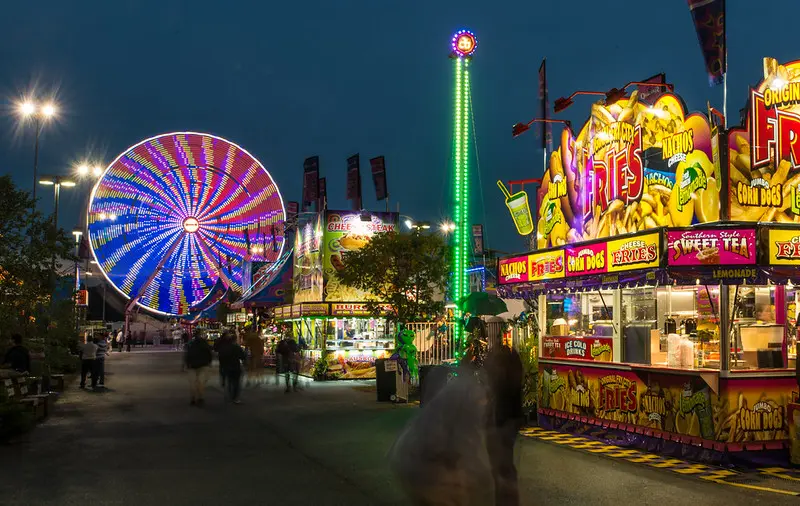
    Nighttime Funfair With Illuminated Ferris Wheel

    Start with the official operating calendar

    Before comparing crowd calendars or flight deals, establish whether the park is open. Some famous European parks operate mainly from spring through autumn with specific winter event periods. Others have year-round hotel or indoor facilities while the outdoor rides are closed. Water parks in cooler regions may operate for only part of the year, and animal parks can keep their gates open with shorter winter hours.

    Find the park’s current calendar, then check whether the full ride offering is available on your chosen dates. Opening the gates does not guarantee that every coaster, show, animal encounter or water attraction is operating. Planned maintenance, weather restrictions and staffing can alter the experience. If your trip depends on one headliner, see whether the operator lists seasonal closures or refurbishment notices; ask before booking non-refundable travel where information is unclear.

    At destinations with multiple gate types, verify each calendar separately. Universal Orlando’s theme parks and Volcano Bay are not interchangeable, and Disney’s water parks do not necessarily follow Magic Kingdom hours. The same principle applies to resort complexes throughout Asia and Europe. ‘Resort open’ can mean the hotel is taking guests even if a particular attraction is unavailable.

    School holidays have a greater effect than the month name

    High season is shaped by local demand as much as international tourism. U.S. spring breaks are not one nationwide week; different school districts take time off on different dates. British half-term breaks can affect parks in the United Kingdom and nearby European destinations. Japan’s Golden Week is an important national travel period, and school holidays in Singapore, South Korea, China or Australia influence local attendance.

    Search the school calendar of the destination, not only the one in your home country. Then examine public holidays, long weekends, and any major conventions or events near the park. A Monday after a local holiday can be busier than the Saturday before it; this is why generic ‘go on Tuesday’ advice is unreliable. A useful first-pass method is to mark the dates of each relevant school break in a calendar and identify the weekdays that sit between them.

    Hotel prices can offer clues but are not a precise crowd meter. A big convention may increase room rates without changing park attendance much, and a destination with many hotels may still have busy theme parks when overnight rates look moderate. Use accommodation prices to test the overall affordability of the trip rather than to claim a guaranteed attendance level.

    Florida: comfort, storms and holiday demand

    Central Florida’s outdoor parks can be enjoyed throughout much of the year, but summer heat and humidity change how visitors should pace a day. Afternoon thunderstorms may pause outdoor attractions; short showers can also clear while indoor experiences continue. Pack sun protection, plan hydration and establish an indoor or shaded option before the first storm. Avoid scheduling all outdoor thrill rides for a single late-afternoon window.

    Winter can feel more comfortable for extensive walking, although it brings shorter daylight hours and occasional chilly days, especially for water attractions. Holiday celebrations at Disney and Universal are significant reasons to visit and may involve separately ticketed events and changed operating hours. A quieter date between holiday waves might offer a good compromise, but never buy airfare solely because a third-party website predicts ‘green’ crowds.

    For mixed Disney and Universal trips, compare calendars at all intended parks. One gate can close early for an event while another remains open later. If you are travelling around a planned maintenance period—such as the Universal Volcano Bay closure announced for late October 2026—treat the water park as unavailable until the operator confirms reopening.

    California: year-round access does not mean identical experiences

    Disneyland Resort, Universal Studios Hollywood and several Southern California attractions operate on long schedules, but a year-round park still changes with the season. Summer school holidays, October Halloween programming, winter decorations and selected special events can alter crowd patterns. An after-hours event may cause the daytime park to close earlier for regular-ticket holders.

    California weather is generally different from humid Orlando, but heatwaves, rain and cold evenings all affect comfort. Coastal mornings may be mild while inland coaster parks become much hotter. If you want to add Six Flags Magic Mountain or other regional parks to an Anaheim stay, check the individual day’s calendar and transport needs: some parks do not have identical weekday operating schedules throughout the year.

    A successful California trip gives each major destination its own day and does not rely on a mythical off-season when every park is empty. Reserve time for traffic and realistic transfers. Families with younger children may find a moderate-weather period more valuable than the smallest possible queues in extreme heat.

    Europe: check seasonal openings before anything else

    Europe varies widely. Europa-Park, Efteling, PortAventura, Alton Towers and other popular destinations differ in opening seasons, special-event dates and winter availability. Some parks remain open through select winter weeks, while others suspend much of their outdoor ride operations. Indoor water resorts may be available when nearby coaster parks are not.

    Late spring and early autumn can offer a useful balance of daylight and temperatures in many parts of Europe, but national holidays can still create heavy demand. If a roller coaster is the main reason for travelling to Germany, Poland or Sweden, confirm its operating season. If a zoo or aquarium is the priority, shorter winter opening hours may be acceptable—especially if indoor exhibits are the main attraction.

    Families combining multiple countries should not assume that neighbouring parks observe the same school holidays. For instance, Dutch, Belgian, German and French vacation dates can overlap without matching exactly. Confirm the opening calendar, then review regional holidays before buying train or flight tickets.

    Japan, South Korea and China: holidays and weather matter

    Japan’s major park destinations—including Tokyo Disney Resort and Universal Studios Japan—can see intense demand around domestic holidays and popular seasonal periods. Golden Week, year-end breaks and summer school holidays deserve special attention. Cherry blossom season draws travellers to Japan generally, although the exact impact differs by park. Summer may bring high heat and humidity, while typhoons can affect travel and attraction operations.

    A good Japan itinerary includes buffer time between parks and long-distance transfers. Do not assume you can arrive by intercity train at lunchtime and still comfortably see an entire park. Official apps, dated tickets and any timed-entry requirements may shape the day, so read instructions for the specific operator before travel.

    South Korea and China have their own public-holiday calendars, with Lunar New Year and nationally significant holiday periods affecting domestic travel. In China, long holiday breaks can change both park attendance and hotel pricing sharply. Check the appropriate local calendar, travel documentation and language support rather than copying a Japan-specific crowd strategy to every Asian destination.

    Southeast Asia and the Middle East: prioritize climate

    Singapore’s large parks can operate year-round, but humid conditions and heavy rain change the rhythm of a visit. Early starts, waterproof storage and indoor alternatives can make more difference than squeezing in one additional ride. In Thailand, Malaysia and Indonesia, seasonal rainfall varies by region; do not treat ‘monsoon season’ as one uniform pattern across the entire area.

    In Dubai and Abu Dhabi, outdoor sightseeing is often more comfortable in the cooler part of the year, while indoor parks can be an attractive option during very hot months. Desert heat can affect queuing, hydration and the viability of combining several outdoor attractions in one day. Review local calendars around Ramadan and religious holidays, when opening times and visitor patterns may differ from ordinary schedules.

    Water parks and wildlife attractions present different considerations. A water park may be more appealing in warm weather but close attractions during unsafe conditions; a safari or outdoor animal park may offer more comfortable walking and sometimes better opportunities to observe active animals when the sun is less intense. Always put current operator schedules first.

    Australia, New Zealand and southern hemisphere trips

    Remember that seasons reverse south of the equator. December and January are summer in much of Australia and New Zealand, bringing attractive outdoor conditions but also major school holiday demand. Winter can be a good time for some wildlife visits, yet water attractions may have reduced availability or less comfortable temperatures depending on location.

    The Gold Coast has clusters of theme and water parks that make multi-day packages tempting. Buy only after checking individual operating schedules and whether your family has enough days to use the included admissions. In New Zealand, smaller regional parks and family attractions can operate different weekly hours from the major year-round tourist attractions.

    If combining theme parks with a long-distance road trip, keep driving days separate from major park days when possible. The weather that is perfect for a coastal tour may not be ideal for standing in a queue, and summer road traffic can undermine an overambitious itinerary.

    How to compare two potential travel weeks

    Create a simple spreadsheet or note with each candidate week on its own line. Score the dates on five factors: confirmed opening days, local holidays, likely weather comfort, hotel and transport costs, and any special experience you particularly want. Do not invent a numerical precision for crowd levels; use broad labels such as ‘school break’, ‘ordinary weekday’ or ‘special-event day’. Give extra weight to factors your family cannot compromise on.

    Check your must-do attraction, not only the park calendar. If that ride is expected to be closed, the cheapest week might be the wrong choice. Next, look at your ability to move the visit by one or two days if travel disruption occurs. Finally, book using cancellation or rebooking terms that reflect the season’s risks. For a large international holiday, flexibility can have more real value than a small upfront discount.

    Frequently asked questions

    What is the least crowded month for theme parks?

    There is no universal answer. Holidays, special events, weather and individual park schedules matter more than the name of the month. Compare dates locally.

    Are weekdays always less crowded than weekends?

    No. A school-holiday weekday or special-event day can be busier than an ordinary weekend. In seasonal parks, some weekday dates are closed altogether.

    Is autumn a good time for theme parks?

    Often, but not everywhere. Cooler weather can help at many destinations; Halloween events, school breaks and seasonal closures may increase demand or reduce ride availability.

    Should I travel during the rainy season to save money?

    Only if the operator is open, you are comfortable with disruption risk and your bookings are sufficiently flexible. Check local rainfall patterns and safety guidance.

    How far ahead should I check ride maintenance?

    Check while planning and again before final payment and departure. Operators update refurbishment information, and unplanned closures can still occur on the day.

    Related Visit Theme Parks guides

    Explore these existing park guides: Europa-Park Guide: Voltron, Silver Star, WODAN and a Realistic One-Day Plan; Tokyo Disneyland Guide: Beauty and the Beast, Baymax and One-Day Plan; Liseberg Guide: Helix, Balder, Valkyria, Stormvåg and One-Day Plan; Everland Guide: T Express, Panda World, Safari World and One-Day Plan; Energylandia Guide: Hyperion, Zadra, Abyssus and One-Day Plan.

    Official sources and further verification

    For current admission, safety rules, park services and policies, consult Universal Orlando operating hours and updates; Disneyland Resort admission and Park Hopper rules. Operator information takes precedence over general visitor advice.

  • Disneyland California vs Walt Disney World Florida: Which Disney Trip Is Better?

    Disneyland California vs Walt Disney World Florida: Which Disney Trip Is Better?

    At a glance: Choose Disneyland California for a compact two-park holiday or Southern California itinerary; choose Walt Disney World for four distinct Disney parks and a longer resort stay.

    The two famous U.S. Disney destinations can look interchangeable in holiday advertisements: castles, familiar characters, themed lands and fireworks. On the ground, Disneyland Resort in Anaheim and Walt Disney World near Orlando offer quite different holidays. Disneyland is a two-park destination with a compact layout and strong appeal for a short California trip. Walt Disney World is a large multi-park resort where transport, hotel selection and itinerary design play a much bigger role.

    The better choice is not simply the resort with more attractions. It depends on where you are travelling from, how many days you have, which individual rides matter to you and whether the Disney parks will be the whole holiday or part of a broader road trip. Comparing both resorts at the right scale avoids buying more admission than you need—or arriving in Florida with far too little time.

    Disneyland vs Disney World: the essential differences

    Planning question Disneyland Resort, Anaheim Walt Disney World, Florida
    Main theme parks Disneyland Park and Disney California Adventure Magic Kingdom, EPCOT, Hollywood Studios, Animal Kingdom
    Typical introduction Two or three dedicated park days Four or more dedicated park days
    Walking between parks The two gates face each other across an esplanade Parks are spread across a much larger property
    Particularly distinctive experiences Cars Land, classic Disneyland attractions, California Adventure EPCOT, Animal Kingdom, expansive resort experiences
    Add-on holiday Los Angeles, Orange County beaches, Southern California Orlando attractions, Florida beaches and other Florida destinations
    Important ticket issue Disneyland generally requires valid park reservations alongside tickets Date-based Disney World tickets generally do not require park reservations; other types may

    Neither a three-day recommendation nor a four-day recommendation guarantees you will see everything. Attraction closures, seasonal entertainment and the interests of your group matter more than a theoretical ride-count target.

    Horse Drawn Main Street Streetcar At Disneyland Park Anaheim California

    What is at Disneyland Resort?

    Disneyland Park is the original California Disney theme park. It is particularly appealing to visitors who want the storybook atmosphere associated with Disney’s earliest park, combined with Star Wars: Galaxy’s Edge, classic dark rides, New Orleans Square and several major thrill attractions. The resort’s history is part of the appeal: you can experience a more intimate, densely layered park, even though busy paths and queues can still make the day feel intense.

    Across the esplanade, Disney California Adventure has a different identity. Cars Land recreates Radiator Springs and makes a compelling reason to choose Anaheim for Pixar fans. Avengers Campus, Pixar Pier, Grizzly Peak and San Fransokyo Square add variety and a California flavour. The two parks are close enough that switching may be convenient with an eligible Park Hopper ticket, but hopping is not automatically the most economical choice for every holiday.

    Downtown Disney provides dining and shopping outside the park gates. Staying within walking distance of the esplanade can be a major advantage, especially with children who need a rest. Unlike a larger resort itinerary, an Anaheim visitor may find that a hotel near the gates and two focused park days are sufficient to enjoy the core destination.

    What is at Walt Disney World?

    Walt Disney World is four quite different theme parks rather than four copies of Disneyland. Magic Kingdom provides the castle-park experience, with many shared types of attractions but its own layout and ride lineup. EPCOT combines global pavilions, festivals and major rides. Hollywood Studios focuses strongly on film-based worlds, including Star Wars and Toy Story. Animal Kingdom blends animal habitats, landscaped environments and immersive themed experiences.

    The Florida resort also has extensive hotels, recreation, shopping and water-park opportunities, although water-park operations and admission options require separate checking. A family with a whole week can easily build days around very different interests. The trade-off is scale: changing between Magic Kingdom, EPCOT and Animal Kingdom involves real travel time, even when resort transportation is available.

    Some shared brand names hide different experiences. Star Wars: Galaxy’s Edge appears in both U.S. resorts, while other rides and lands are location-specific. Make a wish list based on attraction names and locations, not the assumption that every Disney ride is duplicated in Florida and California.

    Which destination is better for a three-day trip?

    With three full park days, Disneyland is often easier to enjoy without rushing. A natural structure is one day in Disneyland Park, one in California Adventure and a third day to repeat favourites or make use of a Park Hopper ticket. Travellers with less time can still enjoy one carefully chosen park per day. You avoid the substantial inter-park transport required at Disney World and may have a shorter walk back to your accommodation.

    Three days at Disney World can also be excellent, but you must be selective. A family interested in classic Disney rides, Star Wars and animals might choose Magic Kingdom, Hollywood Studios and Animal Kingdom, leaving EPCOT for another trip. Guests who love dining and festivals might substitute EPCOT. Trying to visit all four parks in three days is possible only through intentional compromises and the right ticket, and it is often tiring for first-time visitors.

    The practical distinction is psychological as well as geographic. Disneyland visitors can return to a favourite ride without committing another long transit. Florida visitors should group their plans by park and accept that a four-park destination is designed to reward a longer stay.

    Which destination is better for a full week?

    A week at Walt Disney World gives you room for four different park days, a possible repeat visit, a hotel pool day and a weather buffer. It also suits travellers who want resort dining and downtime without planning a new city excursion each morning. If a Florida storm interrupts an outdoor attraction, having extra time reduces the pressure to see everything immediately.

    A week in Southern California can be just as rewarding, but the appeal may lie in combining two or three Disneyland days with beaches, film-related attractions and a wider Los Angeles itinerary. The region involves driving and congestion, so avoid assuming that every famous attraction is conveniently close to Anaheim. A realistic week might include three Disney days, one relaxed beach day and two carefully selected sightseeing days, with time left for transfers.

    If your holiday is primarily a road trip through California, Anaheim’s compact resort can be easier to insert into the schedule. If the trip exists specifically to explore Disney parks deeply, Florida has more distinct Disney environments to fill the time.

    How tickets and reservations differ

    Disneyland currently uses theme-park reservations for admission alongside valid tickets; Park Hopper access and the time at which guests can change parks are governed by resort rules and may change. Confirm both the ticket and the park reservation before booking a non-refundable flight. A dining reservation does not substitute for admission.

    At Walt Disney World, standard date-based tickets typically allow one theme park per day and do not require theme-park reservations, but other admission types can have different rules. Park Hopper options and separately priced attractions or experiences should be reviewed before checkout. Check Disney’s official ticket screens for your dates, rather than relying on a screenshot from a previous season.

    For either destination, calculate a total per-person vacation cost including tickets, taxes, optional queue services, hotel, flights, meals and local transport. An inexpensive ticket cannot offset a costly flight when the opposite coast is much closer to your home.

    Hotels, airports and ground transportation

    Anaheim is served by several Southern California airports, with journey times that vary considerably by traffic and arrival time. John Wayne Airport is often convenient geographically, while Los Angeles International Airport may offer more flight choices but can involve a longer transfer. Choose flights using total door-to-door time, not merely the distance shown on a map. Hotels within a reasonable walk of the park gates can save both transport money and end-of-day frustration.

    Florida visitors normally use Orlando-area airports and stay either on Disney property or elsewhere in the region. Disney offers transport between many of its hotels and destinations, with different bus, boat, monorail or Skyliner routes depending on location. A hotel near EPCOT is not automatically near Magic Kingdom. Off-site hotels can be good value, but the quote should account for resort or parking fees, transfer availability and how early service begins.

    For families with a stroller, wheelchairs or a large group, the logistics may determine the better resort. A ten-minute walk to a nearby Anaheim hotel after an overstimulating day can outweigh access to an extra theme park you will not have time to visit.

    Best time to travel and climate

    Southern California generally has a different weather profile from Central Florida, with less oppressive summer humidity in many periods, though heatwaves and rain still occur. Florida’s hot, humid months can bring frequent thunderstorms; hurricane-season travel merits flexible bookings. Both destinations have school-holiday surges and special-event calendars, so neither is guaranteed quiet in spring or autumn.

    Look at the local school calendar, major U.S. holidays and the resort’s event calendar together. Halloween and winter celebrations can be fantastic reasons to travel, but they also bring special-ticket events, altered closing times and increased demand. A weekday is not necessarily light-crowd if a festival or discounted-ticket offer draws visitors.

    Do not build your holiday around a single unverified crowd-prediction number. Confirm park opening hours and entertainment schedules closer to departure and give yourself a backup plan if your headline ride is closed for maintenance.

    Who should choose Disneyland?

    Choose Anaheim if you have two or three park days, love the history and atmosphere of Disneyland, particularly want Cars Land, or are combining the parks with a California holiday. It is a strong match for travellers who value convenience and would rather spend time in attractions than between separate gates. A short stay need not feel like an incomplete Disney vacation.

    Families travelling from the western United States or Asia may find the flight practical; travellers from elsewhere should compare actual routes and fares instead of relying on general assumptions. Adults who enjoy detailed environments and returning to favourites might also favour the compact layout. Disneyland’s charm is not that it is smaller and therefore lesser—it offers a concentrated version of a Disney trip.

    Who should choose Walt Disney World?

    Choose Florida if you want EPCOT and Animal Kingdom as destinations in their own right, have at least four full park days, or enjoy a large resort holiday with multiple accommodation choices. It also works well for a multigenerational visit where different people can choose different parks and experiences on different days.

    You will get the most from Disney World if you accept that transport and planning are part of the holiday. Do not schedule two distant parks, a late dinner and a fireworks show on every day without including rest. Leave the calendar a little imperfect: that breathing room is often what turns an expensive Disney holiday into an enjoyable one.

    Frequently asked questions

    Is Disneyland smaller than Disney World?

    Yes. Disneyland Resort has two theme parks in Anaheim, while Walt Disney World has four major theme parks spread across a much larger Florida resort area.

    Does Disneyland California have EPCOT or Animal Kingdom?

    No. Both are exclusive to Walt Disney World in Florida. California Adventure is a different park, not a California version of EPCOT.

    Can I see both Disneyland parks in one day?

    With valid Park Hopper admission and the required reservations it may be possible, but you will miss experiences. Two full days provide a more comfortable first visit.

    Which Disney destination is better for toddlers?

    Both have family-friendly experiences. Disneyland’s compact layout and nearby accommodation can simplify naps; Disney World offers wider variety on a longer trip. Compare actual rides your child can enjoy.

    Is one destination always cheaper?

    No. Flights, hotel location, ticket products and travel dates can outweigh differences in park size. Compare the total cost of the holiday you genuinely intend to take.

    Related Visit Theme Parks guides

    Explore these existing park guides: Disneyland Park California Guide: Best Rides, Rope Drop and One-Day Plan; Disney California Adventure Guide: Cars Land, Avengers Campus and One-Day Plan; Magic Kingdom Guide: Best Rides, One-Day Plan, Tickets and Family Tips; EPCOT Guide: Guardians, World Showcase, One-Day Plan and Family Tips; Disney’s Animal Kingdom Guide: Pandora, Safari, Everest and Family Tips.

    Official sources and further verification

    For current admission, safety rules, park services and policies, consult Disneyland Resort official Park Hopper rules; Walt Disney World official ticket guide. Operator information takes precedence over general visitor advice.

  • Theme Park Ticket Refunds, Date Changes and Cancellations: What to Check Before You Buy

    Theme Park Ticket Refunds, Date Changes and Cancellations: What to Check Before You Buy

    Theme park tickets are easy to purchase online but surprisingly difficult to compare when a holiday needs to change. A ticket may be valid for one date, a season, several days, a special event or a particular park reservation. It may have a separate rule for unused days, paid queue access, weather cancellations and resale. Some attractions use credits rather than admission tickets; some resorts sell accommodation and admission as a package with its own terms. This guide explains the questions that prevent expensive mistakes and how to respond if plans change. It is not legal advice. Consumer rights, operator conditions and refund entitlements vary by jurisdiction, purchase channel and product. The safest approach is to read the actual contract and keep evidence before paying, rather than relying on assurances found in old social-media posts.

    On this page

    Quick planning checklist

    Planning areaRecommended check
    Before paymentRead validity, change and refund terms.
    Sales channelConfirm authorized reseller and merchant.
    DisruptionSave official closure notices and receipts.
    RemedyCheck whether an offer is cash, credit or date change.

    Identify exactly what you are purchasing

    First distinguish a park admission ticket from an attraction reservation, paid fast-track access, parking product, dining plan or special-event entry. One confirmation email may contain several separate entitlements with different cancellation terms. For example, a standard day ticket might allow a date change before its validity deadline, while a seasonal nighttime event ticket might not. Multi-day tickets can have a window within which all visits must occur; once activated, unused days may expire even if the holder becomes tired or changes plans. A park reservation is also not always the same thing as the ticket itself. Some resorts require both, and a paid ticket without the necessary reservation may not secure entry on a crowded date.

    Illustration Of Busy Theme Park Attractions

    Read the product name, park location, travel date, guest category and number of entries before checkout. “One day” might mean one calendar day or one admission, and a two-park ticket may allow entry to both parks on the same day or only one park per day. Check child age bands using the operator's defined age on the relevant date, not a general travel guide's assumption. Family packages may have different conditions from individually purchased tickets. If a special attraction, show or premium access must be booked separately, verify its availability before purchasing nonrefundable admission primarily to enjoy that experience.

    Find the cancellation clause before entering payment details

    Look for the current policy on refunds, date changes, transferable tickets, identification, lost tickets and purchase errors. Write down the deadline for requesting changes and whether the price difference is payable when moving to a more expensive date. Some operators permit changes but do not refund the difference if the new date is cheaper. Others may prohibit changes after first use or require the original purchaser to contact support. A sales banner saying “flexible” is not sufficiently precise; read the restrictions and exclusions. If the booking screen only shows a short summary, open the linked terms and save a copy with the date of purchase. A dated screenshot is helpful if conditions are disputed later.

    Pay attention to terms such as nonrefundable, nontransferable, valid on selected dates, subject to capacity and blackout dates. Disneyland's published vacation-package terms, for instance, contain detailed conditions relating to cancellation windows, unused ticket entitlements and operational changes. That is an example of why package conditions should be read separately from stand-alone admission rules. Do not assume the policy at another Disney resort, Universal destination or independent regional park is identical. The name of a global brand does not establish one worldwide ticket contract. Always identify the contracting company and country of purchase.

    Understand the difference between a date change and a refund

    A date change moves the use of a valid ticket to another available date subject to the product's terms. It may require making a new reservation, paying a price difference or receiving an updated QR code. A refund returns some or all of the payment, often through the original payment method and according to stated timelines. A credit or voucher is different again: it may expire, be restricted to a particular account or have no cash value. When customer service offers an alternative, ask which of these it actually is. Do not accept “we have moved your visit” until the new date appears in an official booking confirmation.

    If there is a schedule conflict, compare the cost of changing the park date with the cost of moving flights, hotels and transport. Sometimes accepting a nominal ticket loss is cheaper than rearranging an entire international holiday. At other times, a flexible hotel and flight booking make it easy to reschedule the day. This is why buying nonrefundable admission many months before the rest of the trip is confirmed can be risky. Plan park tickets as part of the full itinerary rather than a separate purchase made solely because a discount countdown timer creates urgency.

    What if the park closes because of severe weather?

    The answer depends on the venue, the severity and duration of closure and the purchased product. A brief thunderstorm pause on one slide is not the same as cancellation of an entire operating day. Some parks publish rain-check or return-visit policies; others have different rules for indoor attractions, seasonal water parks or special events. Do not assume that rain entitles every visitor to a free ticket. Read the official weather guidance and follow park announcements about evacuations or early closures. If the site is closed, keep the operator's notice and purchase receipt, then ask support about options under the actual terms. A general guide cannot guarantee a refund without those facts.

    When lightning, high winds or another hazard triggers a closure, safety must come before payment discussions. Follow staff instructions and leave restricted areas promptly. Do not remain in a water park or near exposed rides trying to obtain a compensation decision. Once safe, document the date, time and official announcement. If an event has been postponed rather than cancelled, find out whether existing tickets will automatically work on the new date. This can affect hotel and transport arrangements, especially for a family flying internationally. If a third-party merchant sold the ticket, check whether the operator or reseller is responsible for processing a request.

    A park ticket does not ordinarily promise that every individual ride will operate every minute. Published terms may allow maintenance closures, show cancellations or ride substitutions. A guest disappointed by a single headline coaster should not automatically expect the admission charge back. That said, a separate paid experience that cannot be delivered may have different remedies under its contract or applicable law. Keep records and ask the operator about available alternatives. If premium queue access could not be used because a ride closed, check whether the product includes replacement access, credit or another remedy. Similar-looking priority products from different operators can have entirely different rules.

    If a refurbishment is announced before travel, reconsider the trip based on your own priorities. A destination with many suitable attractions may still be worthwhile, while a person traveling specifically for one coaster may prefer a different date. Check operator notices before completing the purchase, not only on the morning of the visit. The risk of disappointment is part of the reason to build an itinerary with backups. Avoid interpreting a fan rumor or a ride-testing video as confirmation that an attraction will reopen in time for your holiday.

    Direct booking or third-party ticket reseller?

    Direct booking generally gives you a clearer relationship with the operator, but it does not automatically create a refund right. Authorized resellers may offer useful bundles or prices, but their terms can differ. Before buying from a reseller, confirm that it is authorized, that the ticket can be linked to any required park app and that you understand who handles cancellations. Check whether the reseller is the merchant of record and whether payment is collected in another currency. A voucher requiring redemption is not necessarily an admission ticket. Make sure there are enough available dates for redemption before purchasing a bargain that sounds too good to miss.

    Be particularly cautious about peer-to-peer tickets and social media listings. Many operators prohibit resale or transfer, may link a ticket to a named guest or account and may use identification or other checks. A screenshot of a QR code does not prove that the ticket is valid or unused. Avoid sending identity documents to an unknown seller. If an offer is dramatically below the official price, confirm authenticity through the park's approved sales channels. The financial risk of a rejected ticket includes not only admission cost but also a wasted day of accommodation and transport.

    Organize evidence before contacting customer service

    Keep the original purchase confirmation, payment reference, product terms, guest names, dates and any message showing the issue. Compose a short factual request: what was purchased, the date of intended use, what changed and what remedy is requested. Attach only relevant documents, avoiding unnecessary personal information. If support offers a new ticket or credit, ask for written confirmation and the new expiry date. Record case numbers and keep communications in one folder. When deadlines are approaching, contact support promptly through the official channel. A customer-service chat that says “we are looking into it” may not preserve a deadline unless the operator's written terms say so.

    For unresolved disputes, check applicable consumer-law resources or official dispute-resolution bodies in the country connected to the purchase. Card chargeback rights may apply in certain circumstances, but they have conditions and deadlines; a chargeback is not a substitute for understanding the contract. If a travel insurance policy may cover an illness-related change, read its covered reasons and exclusions. Ordinary “changed our mind” situations and known event cancellations are often treated differently. Do not submit inaccurate claims or suggest facts you cannot prove. A careful paper trail strengthens a legitimate request and reduces misunderstandings.

    A practical pre-purchase checklist

    Before clicking pay, answer these questions in writing: Can I change the date? Is any difference in price charged? When does the ticket expire? Is a park reservation also required? What happens if the park closes early? Who processes refunds? Are special shows or premium attractions included? Can names be corrected? Does the ticket allow re-entry? Is there an extra surcharge for selected peak dates? Is the QR code issued immediately or only after voucher redemption? These checks take a few minutes but can prevent significant holiday stress. If essential information is missing, ask the seller before making a nonrefundable purchase.

    Frequently asked questions

    Are theme park tickets always nonrefundable?

    No. Conditions differ by operator, product and applicable law. Many tickets have restrictions, but some allow date changes, credits or refunds in particular circumstances.

    Can I change the name on a ticket?

    Only if the product terms and operator permit it. Named, activated or partially used tickets may be especially restricted.

    Will I receive a refund if one ride is closed?

    Not automatically. Ride availability is often subject to operational conditions. Review the specific ticket terms and any separate paid-experience agreement.

    Does travel insurance pay if I change my mind?

    Ordinary voluntary changes are frequently excluded. Check the actual policy and any covered cancellation reasons before assuming protection.

    Should I buy from a reseller?

    Only after verifying the merchant, validity, redemption requirements and refund terms. The lowest displayed price is not necessarily the safest overall purchase.

    Official references and policies

    Disneyland package cancellation and ticket terms — review current details directly with the source.

    Universal Orlando ticket information — review current details directly with the source.

    Final planning advice

    A ticket's true value includes flexibility, not just admission price. Read the operator's current conditions, save a copy and confirm any date-specific requirements before paying. That small step protects the wider holiday budget and reduces the risk of avoidable disappointments.

  • Theme Park Ride Closures and Refurbishments: How to Plan Around Downtime and Unexpected Changes

    Theme Park Ride Closures and Refurbishments: How to Plan Around Downtime and Unexpected Changes

    A theme park holiday may involve flights, hotel bookings and costly tickets, yet one much-anticipated ride can be unavailable on arrival. Sometimes this is due to scheduled refurbishment; sometimes a ride pauses unexpectedly for technical, weather or operational reasons. Closure notices can also be difficult to interpret because a short interruption is not the same as a seasonal shutdown or permanent removal. A visitor who understands those differences can make better booking decisions and spend less time waiting outside an attraction that may not reopen. This guide explains how to research ride availability, build a flexible touring plan and handle disappointment without assuming that an admission ticket guarantees every attraction will run.

    On this page

    Quick planning checklist

    Planning areaRecommended check
    Before purchaseReview planned refurbishment notices.
    In the parkCheck current operator app updates.
    Backup planGroup alternative rides near the same area.
    ClaimsReview terms before expecting compensation.

    Understand the different types of closure

    Scheduled refurbishment is maintenance, inspection or improvement planned in advance. A ride may be closed for days, weeks or months, with dates that can move as work progresses. Seasonal closure occurs when an attraction or an entire outdoor area operates only at particular times of year, often influenced by climate or visitor demand. Temporary downtime is an unplanned pause caused by technical checks, weather or other operating conditions; it might last minutes or the remainder of the day. Permanent closure means the ride is retired, perhaps to make space for new development. These categories are important because each has different implications for a holiday. A short pause in the app should not be treated as evidence that a ride has closed permanently.

    Operators typically decide when an attraction may safely reopen; guests should never press staff to run a ride while required checks are underway. Safety systems, evacuation procedures and inspections are part of operating complex machinery. You may not receive detailed technical explanations, and staff may be unable to estimate a reopening time. Avoid interpreting a train moving during a test cycle as proof that the ride will accept passengers immediately. A park's daily operating schedule is also different from a guarantee about individual rides. Terms and conditions often allow changes to attractions, shows and opening hours. Disneyland's published vacation-package conditions, for example, describe the possibility of closures and modifications, including for refurbishment and weather.

    Illustration Of Children At Colorful Funfair

    Research attraction availability before booking a trip

    Start with the official park calendar and the specific attraction's page. Some operators publish refurbishment dates and seasonal schedules, while others provide only general hours. Look at the date of the announcement and whether it describes planned work or an approximate reopening. Do not rely on a search result headline from an older season. If the ride is the main purpose of the trip, contact the park directly about current information, but understand that future dates remain subject to change. A resort may announce a reopening window without committing to an exact day. Try to avoid making a nonrefundable international booking based solely on an estimated completion date.

    Build a short “must-do” list and mark which attractions are especially sensitive to closures. If one ride accounts for almost all of the appeal, consider delaying the visit or choosing refundable accommodation. If several attractions are appealing, the destination is more resilient to downtime. For a multi-park resort, research every park on the ticket and any special-event schedule, because a particular attraction might close early on event nights. A water park can have separate seasonal operation from the adjacent theme park. Zoo exhibits and aquarium areas may also close temporarily for animal care or habitat work. The same planning logic applies across entertainment venues: identify what is essential and what is merely a bonus.

    Use official updates during the visit

    On arrival, check the official app or information boards for the day's ride status. Understand the symbols: a wait time can signal that a ride is operating, while “temporarily unavailable” is usually a different condition from “closed for refurbishment.” The app may update with a delay, especially after a sudden technical pause. Ask an employee if a ride is important, but do not expect certainty about an exact reopening. Never join a closed queue or cross barriers because guests appear to be entering elsewhere. Where a ride offers virtual queue or reserved access, review what happens to a reservation if the attraction stops operating. Policies are complex and can change by product and date.

    A practical approach is to check status when entering an area, once again before a substantial walk and finally before buying any optional priority access. Avoid refreshing the app every two minutes while missing entertainment nearby. If a ride is down, choose a nearby attraction or meal instead of waiting outside indefinitely. When staff announce a temporary evacuation, follow their instructions without arguing about queue position. If you receive an official return voucher or alternative entitlement, read its conditions and expiry carefully. Do not assume every delay leads to a free pass. Operational decisions are different across parks and may depend on whether you were in the queue, on the ride or holding a paid reservation.

    Make a flexible one-day touring plan

    Arrange your itinerary in three layers. Layer one contains two or three top priorities, with a fallback for each. Layer two contains nearby attractions and shows that are appealing but not essential. Layer three includes meals, themed streets, gardens and rest periods that still make the visit enjoyable if major rides pause. An effective morning may begin at one important attraction, continue with a short adjacent ride and end with a scheduled show. If the headline attraction closes, shift to another priority without crossing the entire park in a hurry. This reduces the frustration of being caught in a constant loop of last-minute changes.

    Keep buffer time for weather and maintenance interruptions. On a day with high winds, some outdoor attractions may pause repeatedly; on a hot day, cooling or technical checks can affect operations. Don't assume every attraction responds to weather the same way. Indoor rides may also have outages, while a show venue might remain open. If the group includes toddlers or grandparents, use downtime to rest in a suitable space rather than forcing another long queue. The day does not become a failure because a ride is unavailable. A well-chosen replacement can be a new favorite, especially when everybody is open to different forms of entertainment.

    Compare refund and compensation expectations carefully

    Buying admission generally grants access under the operator's stated terms, not an unconditional promise that every advertised ride will be available. Refund rights vary by country, operator, ticket type and cause of cancellation. If the entire park closes or a separately purchased experience is cancelled, the situation may differ from one individual attraction being unavailable. Never assume a refund or free return visit is legally required because a popular coaster experienced downtime. Check the specific written contract, local consumer protections and official communication. A general blog cannot determine entitlement without knowing the purchase and jurisdiction.

    If you paid for a premium queue product associated with an unavailable attraction, retain proof of the purchase and any relevant messages. Ask guest services what alternatives are officially offered, including a new time, substitute experience or refund under the product terms. Keep the conversation factual: state the purchase reference, date, unavailable service and remedy sought. Staff may have different authority depending on whether the ticket was bought directly or through a reseller. Third-party packages can add another layer of rules; identify the merchant of record before contacting support. Save screenshots of posted closures, but do not interfere with employees or emergency procedures to collect evidence.

    How refurbishments affect multi-day holidays

    Longer visits make it easier to move priorities between days, but not every attraction reopens before departure. If the same ticket covers several parks, check whether visiting the affected park later in the holiday could help. Look carefully at reservation requirements, park-hopping restrictions and transport times before changing dates. A closure can be a reason to spend more time exploring a different themed land, water park or aquarium, but don't overstuff the backup plan. For families, a recovery day may be more useful than booking another park to compensate for disappointment. If you have two or three park days, keep one flexible afternoon to revisit a favorite ride only if it is confirmed operating.

    Group travel needs clear communication. Tell children about uncertainty in advance, without turning it into a source of worry. Say “This ride may be closed, so our alternative is the train and the interactive exhibition,” rather than guaranteeing an opening that staff have not confirmed. Teenagers may care about specific coasters; invite them to pick a second choice. People with disabilities should verify whether the replacement experience is accessible, as an alternative voucher is not helpful if the substitute ride requires an impossible transfer. If a booked accessible service becomes unavailable, contact guest services to discuss suitable options rather than accepting any replacement without question.

    Evaluate rumors, fan reports and viral videos

    Fan communities often notice construction activity before official news, and they can be useful for background. But a photograph of a testing train does not establish a public reopening date. An employee's informal remark may not represent the operator's published policy. Rumors circulate quickly about temporary downtime, major repairs and permanent closures. When the claim affects purchasing decisions, prioritize an official announcement and check its publication date. Be especially wary of automatically generated schedules that display future operating hours as though they were final. Seasonal calendars sometimes change after the first announcement. If the official operator does not provide certainty, report that uncertainty rather than trying to fill the gap with speculation.

    Frequently asked questions

    Can a ride reopen later the same day after downtime?

    Yes, some do, but a temporary pause can also last the entire day. Only the operator can confirm current status and safe reopening.

    Does my ticket guarantee access to every attraction?

    Usually not. Ticket rights depend on the operator's terms, park access rules and applicable law. Read the specific conditions before purchasing.

    Should I wait outside a closed ride entrance?

    Generally follow staff directions and use another activity rather than waiting indefinitely. A crowd outside the entrance does not establish when boarding will resume.

    Is a refurbishment date a guaranteed reopening date?

    Not unless the operator expressly makes that commitment, and even published dates may be subject to conditions. Be cautious with nonrefundable travel bookings.

    What can I do if paid priority access becomes unusable?

    Keep the receipt and contact the operator or merchant according to the product terms. Remedies can vary and should not be assumed from another park's practice.

    Official references and policies

    Disneyland vacation package terms and operational changes — review current details directly with the source.

    Walt Disney World 2026 attraction changes — review current details directly with the source.

    Final planning advice

    Research major closures before paying, monitor official updates during the day and keep attractive alternatives close to your priorities. Flexibility is not a compromise: it is the most reliable strategy for enjoying a park built around complex attractions and changing conditions.

  • Theme Park Photos: PhotoPass, Ride Pictures and Camera Rules Explained

    Theme Park Photos: PhotoPass, Ride Pictures and Camera Rules Explained

    Photographs are among the most lasting souvenirs from a theme park. The challenge is deciding when paying for professional images adds value, when a phone is enough and when photography interferes with safety or other visitors' experiences. Some resorts offer dedicated photo packages and on-ride images; others rely on individual photo booths or roaming photographers. Pricing, ownership terms and ride restrictions differ widely, so the best strategy is to understand the product before the first posed photograph.

    On this page

    Quick planning checklist

    Planning areaRecommended check
    Photo packageCheck participating locations and download rights.
    On ridesFollow camera and loose-object restrictions.
    PrivacyRespect other guests and children in photos.
    After travelDownload originals before the published deadline.

    Know what the photo package actually includes

    PhotoPass, Memory Maker and similar branded services are not interchangeable. A product may cover digital downloads from official photographers, ride photographs, selected magic effects or group images, but not printed products or every special event. Another park may sell only one individual image or require scanning a wristband after the ride. Check which locations participate and whether images are linked automatically to the ticket or must be claimed within a time limit.

    Read the operator's current terms for download windows, image resolution, permitted sharing and refund conditions. A digital package bought early may differ from a product purchased after the visit. A family should avoid assuming that 'unlimited' means every person, camera and separately operated attraction is included. If everybody is excited about on-ride photos, count how many participating attractions they will realistically use before deciding the package offers good value.

    Decide between professional photos and personal devices

    A photographer can produce a convenient group picture with nobody missing from the frame. That is especially valuable for multigenerational families who rarely appear together in holiday photographs. But personal phones remain useful for themed details, relaxed portraits, food and the atmosphere around a show. Use the two approaches together rather than trying to document every minute. A day dominated by repeated photo stops can frustrate children or visitors who would rather experience attractions.

    Nighttime Funfair With Illuminated Ferris Wheel

    Ask whether the photographer's system provides an image preview or identification code. Keep the code in a secure note and verify that the photo is associated with the correct booking before leaving the location. Review the image at a sensible moment rather than holding up a queue. If a group member dislikes being photographed, respect the preference and plan the composition accordingly; ticket purchase does not remove the need for consent.

    On-ride photography and prohibited devices

    Many attractions have strict loose-article rules. A phone, action camera, selfie stick or clip-on mount can become hazardous when a train accelerates or changes direction. Some attractions ban handheld filming altogether, including devices attached to wrists or chest harnesses. Other experiences permit photography only without flash. Never hide a device to get footage after staff instruct you to secure it; the issue is safety, not merely lost revenue for a photo booth.

    Use the official on-ride photo system when one is available and worthwhile. If the park requires lockers, place all prohibited items there before reaching boarding. Read whether eyeglasses, hats and small bags need securing. For live shows, follow instructions about flash, video recording and copyrighted performances. If you are not sure whether a ride permits a camera, ask the attendant before entering the queue rather than making an assumption based on another park.

    Photograph children and other guests respectfully

    Public spaces inside commercial parks have rules and expectations about filming. Avoid closely photographing unrelated children or following performers outside authorized interactions. When uploading a family photo, consider whether strangers in the background could be unnecessarily identified. Obtain appropriate consent before publishing someone else's face in a commercial project. Costume characters often have structured meeting procedures; allow others their turn and do not push forward to capture an unapproved close-up.

    For children in the group, consider whether sharing real-time location information is wise. A caption revealing exactly where the family is staying or which gate they will leave through adds little to the memory. If the trip is documented for social media, separate private family pictures from content intended for public publication. A dramatic image should never require crossing a rope, entering restricted landscaping or obstructing a ride exit.

    Better photos without expensive equipment

    Early and late daylight can provide attractive conditions on themed streets, but park operating schedules and weather matter more than a generic photography rule. Look for foreground elements that give a sense of scale: an entrance sign, sculpted landscaping or a moving tram. Use a stable stance and a short pause to let passing crowds disperse naturally. For nighttime lights, steady the phone and avoid forcing the group to stop in the main pedestrian flow.

    Back up important images when there is a reliable connection, and keep enough storage space for the rest of the holiday. Carry a permitted power bank because photography can drain a phone needed for digital tickets. For expensive cameras, check bag-size and tripod rules in advance; some parks prohibit professional-looking equipment without authorization. You can create excellent memories with a simple phone while enjoying the visit more fully.

    Budget and purchase timing

    A photo package makes sense when the whole party wants professional group portraits, many participating attractions are planned and the operator's terms include useful digital files. Individual purchases may be wiser for a short visit or a family whose children avoid intense rides. Compare costs after including taxes and any separate print charges. If the photo service is tied to a certain number of days, check whether non-park days consume the entitlement period.

    Never buy an unofficial code or download promised by a stranger online. Use the operator's store, app or authorized photographer. If a photo fails to appear, note the ride, approximate time, date and receipt before contacting official support. Image-recovery options depend on what the operator can locate; nobody should assume a photo is guaranteed simply because the camera flashed.

    Plan a small photo itinerary

    Choose two or three meaningful locations: a group image near an iconic entrance, a family portrait after a favorite show and one relaxed evening photograph. If the park has an official photo package, identify participating sites that lie near your planned route rather than crisscrossing the grounds. One adult can handle image retrieval while another takes responsibility for meeting points and child supervision. Keep photography secondary to the shared day.

    People have different preferences. A teenager might like a dramatic ride picture; a grandparent may value a portrait with the family; a child may not enjoy bright flashes. The best album includes those differences rather than repeating the same posed image. Add captions after the holiday when there is time to remember what made each moment special.

    Comparing three typical photo-buying scenarios

    A couple on a single-day visit might want one high-quality entrance portrait and perhaps a favorite coaster picture. Individual downloads can be better value than an unlimited package, provided the operator sells them separately. A family spending four days at the same resort may obtain far more use from a multi-day digital package, especially when photographs are taken by official photographers in several themed lands. A youth group may primarily need one authorized group photo, with appropriate consent, rather than separate images for every participant.

    Build a simple calculation with expected images rather than hypothetical maximum use. Ask: How many participating attractions will we ride? Will everyone be photographed together? Are digital files required, or would a printed souvenir be enough? Will we have time to visit designated photo locations? A 'great value' unlimited product can become expensive if the party repeatedly diverts from planned activities just to create more pictures.

    Camera settings and accessible photography

    Visitors with limited dexterity or visual impairments may prefer accessible camera controls, voice commands or help from an agreed companion. The operator's own photo service can be a useful alternative to handling a phone in a busy queue. When someone does not want to be photographed or shared online, respect that choice even if a group has already purchased a package. Consent and accessibility should shape the activity, not appear as afterthoughts.

    For nighttime photography, do not stand in the flow of guests heading toward exits or transportation. Use an approved static viewpoint and avoid flash during performances where prohibited. A compact camera should be secured in a bag before boarding a ride, even when a device seems light. If an operator bans tripods or selfie sticks, follow the ban rather than arguing that the equipment is 'only for one picture.' Good photographs are never worth a safety incident.

    After the visit: download and protect the files

    Check the photo service's retention period as soon as the holiday ends. Download originals within the official window, back them up to a second location and keep receipts until the image order is resolved. If the license limits commercial use, respect that condition when publishing pictures on a monetized travel blog. Avoid copying watermarked preview images from an operator's shop or removing copyright identifiers. A purchased digital file still has usage terms, and the operator's website is the authoritative place to check them.

    Frequently asked questions

    Are all ride photos included in a park photo pass?

    Not necessarily. Participating rides, event images and product terms vary by park and package.

    Can I bring a GoPro onto a roller coaster?

    Only where the attraction expressly permits it. Do not assume a strap or mount makes it acceptable.

    Is a professional package worth buying before arrival?

    Compare official terms and your expected use. Discounts may exist, but a shorter visit may justify individual photos instead.

    Can I take photos of characters?

    Usually in designated interaction areas under park procedures; respect staff instructions and other guests' privacy.

    What happens if I cannot find a purchased image?

    Contact the authorized photo provider with the date, location, approximate time and order reference promptly.

    Official references and policies

    Walt Disney World PhotoPass Service — review current conditions directly with the operator.

    Disneyland rules including selfie sticks — review current conditions directly with the operator.

    Final planning advice

    Select a few special pictures, respect ride rules and choose photo products on the basis of actual usage. The goal is an album that recalls a wonderful visit, not a visit sacrificed to producing an album.

  • Theme Park Parking, Transport, Lockers and Re-Entry: The Arrival-to-Exit Guide

    Theme Park Parking, Transport, Lockers and Re-Entry: The Arrival-to-Exit Guide

    A theme park day can go wrong before anybody sees a ride. Guests underestimate the distance from parking to the gate, bring bags that attractions will not accept, overlook the final train departure or leave for a hotel break without checking readmission rules. These logistical details are less exciting than a new coaster, yet solving them can save considerable money and frustration. A sensible plan traces the full journey from accommodation to entrance, around the park and back again.

    On this page

    Quick planning checklist

    Planning areaRecommended check
    TransportCalculate door-to-gate time including security.
    ParkingSave vehicle position and confirm fees.
    StorageCheck lockers and ride-specific loose-item rules.
    ExitVerify readmission and final return transport.

    Compare the real ways to reach the park

    Start with the exact gate location rather than the park brand's mailing address. Large resorts may have several entrances and different transport routes for each. Driving can be convenient with children and bulky supplies, but parking may add a substantial daily charge. Public transportation can be more efficient in cities such as Tokyo, Paris or Copenhagen, while rural European parks might require a regional bus or a car. Check the return service carefully: a timetable that gets you there before opening may not bring you home after a nighttime show.

    Shuttles may be included with a hotel, paid separately or available only on selected dates. An official resort bus should not be assumed to serve every off-site property. For taxis and ride-hailing, verify the designated pickup zones and whether access roads close around crowd-release periods. Travelers with wheelchairs should check vehicle dimensions, boarding assistance and the actual accessible route from the drop-off point to security.

    Illustration Of Busy Theme Park Attractions

    Parking is more than a fee

    A car park can occupy an enormous area. Photograph or save the parking section name and row before leaving the vehicle, but do not rely on a single phone with a low battery. Find out whether parking payment is made in advance, at entry or through a machine on departure. Some parks distinguish standard, preferred, oversized or accessible parking; availability and documentation requirements are operator-specific. A preferred space does not always save as much time as a well-organized shuttle.

    Do not leave passports, expensive cameras or essential medication visible in a parked car. High temperatures inside vehicles can be dangerous for children, animals, batteries and temperature-sensitive items. Check local vehicle security advice, lock doors and remember that a car park may not remain accessible throughout special events. Allow time for traffic leaving after fireworks; departure queues can add an unpredictable final hour.

    Gate security and prohibited items

    Before packing, consult the specific operator's guest policies. Parks may restrict glass containers, large coolers, selfie sticks, drones, folding chairs, external speakers and certain wheeled items. Security staff may inspect bags or request that prohibited items be returned to a vehicle. If visitors travel by train, they cannot easily take an unsuitable object back to a parked car. Pack light and use a smaller permitted bag where possible.

    Do not assume that a sealed water bottle, picnic food or a refillable drink container is accepted everywhere. Rules differ, and medically necessary items may have specific procedures. Keep tickets and identification accessible at the checkpoint without displaying personal data unnecessarily. When arriving with a stroller, allow extra time for inspection and be prepared to fold it for some forms of transportation.

    Lockers and loose-item rules

    Many rides limit loose objects because cameras, phones, bags or glasses can become dangerous during sudden movement. Some attractions use ride-specific lockers or assign storage before boarding. Elsewhere, general park lockers are available by size or duration, sometimes with a paid digital code or wristband. A locker near the entrance may be inconvenient if you need medication or a child's supplies halfway through a sprawling park.

    Read the rental conditions: a paid locker may allow repeated opening or only one use, and the charging method may be by day, hour or visit. Some parks require certain riders to use designated storage rather than carrying phones or wearing them on lanyards. Never hide a camera in clothing to bypass the operator's rule. Agree beforehand who carries essential documents, and keep emergency contact information available when the rest of a family's bags are stored.

    Leaving and returning during the day

    Readmission is not universal. Some parks permit re-entry on a valid ticket with a hand stamp, biometric check or digital scan, while special events or capacity rules may limit it. A multi-park ticket may have distinct transfer permissions and time conditions. Do not leave for a midday nap or restaurant outside the gate until the actual day's policy is confirmed by staff or the official website.

    If a hotel is close, a rest break can transform a long day with a baby or older adult. But calculate the full round trip: exit time, shuttle wait, travel, hotel rest, return security and the walk back to attractions. A two-hour break can consume much more than two hours. In some cases a quiet indoor show or relaxed restaurant inside the park is a more practical recovery option.

    Plan the end of the day before it starts

    Many guests leave at the same time after a parade or nighttime spectacular. Identify the exit route, meeting point and final transport departure before the entertainment begins. A scheduled taxi pickup inside a pedestrianized area may be impossible. Wheelchair-accessible transport can require advance booking, particularly late at night. If driving, plan for tired children and make sure the driver has enough rest and attention for the return journey.

    The shortest path out may not be the least stressful. Families can wait a few minutes in a calmer area rather than join a dense crowd with a stroller. If someone uses a mobility device, check the route for steep ramps and closed elevators. Save the hotel address and transport instructions offline, and carry a small reserve of funds for an unexpected alternative journey.

    What to check on booking day and visit day

    When booking, confirm admission, parking policy, public transport connections, readmission and accommodation location. A few days before departure, check construction notices, operating calendars and the travel forecast. On the morning, inspect transit alerts and any operator notice about alternative entrances. Before leaving the gate, retrieve bags and confirm the final shuttle or rail route.

    Costs should be compared as a total: ticket, transport, parking, locker, optional priority access, food and time. A cheap hotel far away can create an expensive car-based holiday. A more expensive property within walking distance may be valuable if several visits are planned. Choose the arrangement that allows the group to enter calmly and leave safely.

    The complete cost of getting through the gate

    A useful transport comparison starts with a simple worksheet. For driving, add fuel, tolls, parking, any preferred-parking supplement and estimated waiting time. For public transport, add tickets for every eligible traveler, the cost of reaching the station and any late-night return taxi if the regular service ends early. For a hotel shuttle, note the frequency, whether seats must be booked, and the last departure after the park closes. A free shuttle can be excellent, but a single hourly departure may be a poor fit for young children who need flexibility.

    For multi-day visits, multiply costs across the trip rather than comparing a single transfer. The convenience of a nearby hotel may grow dramatically when the family returns for naps or medical breaks. Conversely, a visitor exploring an entire city might prefer a central hotel on a reliable railway instead of sleeping at a remote resort. The correct calculation accounts for both money and the fatigue of moving a group through crowds.

    Accessibility and practical equipment choices

    Before renting a wheelchair, mobility scooter or stroller, verify where it can be collected and whether the equipment may leave the park. Rental devices may have limited availability, security deposits or restrictions on transport between different gates. Some visitors bring their own devices and need to understand battery, charger and accessible shuttle rules. Contact the operator for exact vehicle specifications and access policies; a wheelchair symbol on the map is not enough to confirm every transfer will work.

    Families should also consider stroller parking, baby care centers and where accessible restrooms are located. A locker may be convenient for spare clothes but unsuitable for medication that must remain readily available. When carrying temperature-sensitive items, use the manufacturer's guidance and ask the park about appropriate arrangements instead of assuming an ordinary locker is climate controlled. Practical choices should keep essential items accessible without burdening the party with unnecessary luggage.

    A departure failure plan

    Suppose a nighttime show runs late and the family misses the scheduled shuttle. Know whether another service runs, where an authorized taxi can collect passengers and how to contact the hotel. Carry enough phone charge and a backup payment method. If the group becomes separated in the exiting crowd, agree to meet at a visible staffed point rather than at an ambiguous corner of the car park.

    When travel has accessibility requirements, book a suitable backup in advance where feasible and do not assume any random vehicle can transport the equipment. The park is often a wonderful place to be tired; the final transport challenge should not turn that pleasant fatigue into a preventable problem. A successful itinerary ends only when everybody gets safely back to the accommodation.

    Frequently asked questions

    Can I leave the park and return later?

    Sometimes, but re-entry rules vary by ticket, event and date. Ask before exiting.

    Can I leave bags at every roller coaster?

    No. Storage rules differ by ride and park, and some require designated lockers.

    Is preferred parking worth it?

    Compare the actual walking or shuttle difference with its premium price and your mobility needs.

    Will public transport run after fireworks?

    Do not assume so. Check the final confirmed departure and allow for crowds on the way to the stop.

    Are food and drink allowed through security?

    Rules are operator-specific; check current prohibited-item and medical-exception guidance before packing.

    Official references and policies

    Disney World locker rental guidance — review current conditions directly with the operator.

    Disneyland park rules and prohibited items — review current conditions directly with the operator.

    Final planning advice

    Treat arrival, storage, breaks and departure as parts of the theme-park experience. Good logistics are invisible when they work—and can dominate the holiday when they do not.

  • Theme Park Apps and Digital Tickets: Wait Times, Maps and Mobile Ordering

    Theme Park Apps and Digital Tickets: Wait Times, Maps and Mobile Ordering

    A modern park day often starts on a phone long before it starts at a turnstile. Tickets, timed entries, restaurant menus, show schedules and attraction wait estimates may all live inside an operator's app. That can make a complicated resort easier to navigate, but it also creates avoidable problems when a guest loses signal, runs out of battery or discovers that tickets belong to the wrong account. An app is a useful tool, not the holiday itself. The aim is to use it for decisions that matter and leave room to enjoy the park without staring at a screen.

    On this page

    Quick planning checklist

    Planning areaRecommended check
    Before departureLink the correct tickets; save booking references offline.
    Inside the parkCompare queue estimates with walking distance and ride suitability.
    DiningCheck pickup windows and allergy procedures before ordering.
    BackupPlan for low battery, weak signal or lost account access.

    Set up everything before leaving home

    Download the operator's official app from its published website or a trusted app store. Beware advertisements for lookalike ticket wallets or apps that promise impossible queue access. Create the account, verify the email address and confirm the exact tickets, dates and guests linked to it. Resorts sometimes use different apps for different countries or properties; a Disneyland California account will not necessarily manage a reservation at Tokyo Disney Resort. Check the terms for linked tickets before assuming they transfer between users.

    Before departure, learn where the app displays admission barcodes, opening hours, reservation confirmations and any separate timed-entry entitlement. A screenshot can be a useful backup when the operator permits it, but some dynamic tickets and identity checks require the live app or original confirmation. Save the booking number in a separate offline note and keep the payment confirmation available. If one adult manages everybody's admission, decide how the family will enter should that person get separated. Do not share passwords casually with strangers or third-party sellers.

    Illustration Of Children At Colorful Funfair

    Understand wait times without chasing every number

    A displayed queue estimate is a snapshot, not an appointment. It can change as rides reopen, weather moves in, a parade empties one land or a high-capacity attraction slows its dispatch. A 20-minute wait in a distant area may be a worse choice than 35 minutes near the next scheduled show. Compare total walking time, ride suitability and the priorities of your group. Check for attractions that require a reservation or have an independently managed queue; not all rides use the same boarding system.

    Review the map in clusters. If the next two must-do rides are near each other, avoid zigzagging to chase the shortest live estimate elsewhere. On a day with children, include toilets, shaded seating and quiet indoor experiences as legitimate stops. During maintenance interruptions, do not assume a ride will reopen by a promised time simply because it remains visible on the app. Use the operator's push alerts as supporting information, then confirm major changes with staff when necessary.

    Mobile ordering and restaurant reservations

    Mobile ordering can save time at selected quick-service restaurants, but only where it is offered and when pickup slots remain available. Inspect menus before the group gets hungry; a restaurant can be close on the map yet have limited seating, a long pickup window or ingredients unsuitable for someone with an allergy. An app description is not a substitute for speaking to trained staff about a medically relevant ingredient concern. For serious allergies, consult the resort's current dietary guidance and tell the restaurant about the exact requirement.

    Where table-service booking is offered, the reservation is typically tied to a party size and arrival window. Understand cancellation or no-show policies before confirming a deposit. If you are managing a group, agree on the dining budget in advance so a spontaneous character meal does not disrupt the day. Keep a small offline snack permitted under the park's food policy and refill water when possible. An app should support a relaxed meal, not turn the entire vacation into a series of timed alarms.

    Tickets, virtual queues and paid upgrades are separate products

    A valid entrance ticket does not necessarily include every premium attraction, skip-the-line product or special event. The app may offer virtual queues, paid return times, reserved seating or photo packages. Read what each product actually grants, its reservation window and the rules for modifying it. Availability can change rapidly, particularly at major resorts with complicated systems. Never claim that a particular attraction always uses a virtual queue: the operator may switch it between standby and reservation-based access.

    Plan your visit and check admission

    Check current opening dates, admission rules and ticket options on the official visitor website before travelling.

    Set a clear spending limit for extras before arriving. Buying a priority product because a countdown clock creates urgency is poor budgeting. Ask whether it improves the experience for everybody, including non-riders and children who may not meet boarding requirements. Compare the upgrade against a second park day or a shorter, quieter visit instead. If a payment fails, check for an existing order before retrying and risking duplicate charges.

    Battery, connectivity and privacy

    A phone doing constant map navigation, photos, mobile payment and camera scanning can lose power quickly. Carry a permitted power bank with an appropriate cable and make sure at least one person knows where paper or offline confirmations are stored. Wi-Fi may be available but congested; international data roaming can be expensive. Download offline city maps for travel outside the gate and save the hotel's address without relying on a park-specific app.

    App permissions deserve attention. Location access may improve real-time maps, but it is worth reviewing notifications, photo permissions and family accounts. Avoid logging in on another visitor's phone. If you lose the device, use the relevant account-recovery process and go to Guest Relations with your order reference. Never buy a ticket from a stranger who says they can transfer it through an unofficial screen or social-media message.

    Accessibility and shared planning

    Apps can help wheelchair users locate accessible paths, elevators and restrooms, but a symbol on the map does not guarantee that a particular ride boarding procedure will work for an individual. Review detailed accessibility pages for transfer requirements, sensory effects and queue accommodations. Some visitors prefer printed maps, large text, assistive technology or an in-person conversation. Plan for those alternatives instead of assuming everyone can operate the same touchscreen at the same pace.

    For a mixed-age group, choose one primary organizer and another backup adult who knows the meeting location and can retrieve key reservations. Children should not need access to an adult's wallet to find their family. If the app is confusing, simplify: two important rides, one show and one meal reservation may be enough. A deliberate plan beats a complicated spreadsheet that nobody wants to follow once the day begins.

    A simple app workflow for the actual day

    The night before, verify admission, tomorrow's official hours, attraction closures and transportation options. On arrival, complete entry before reorganizing priorities. At the first break, review current queues and choose the next area rather than making a new decision after every ride. Just before lunch, check food options and allow time for walking and pickup. After a major ride closes, replace it with a nearby indoor experience or scheduled show rather than spending the afternoon waiting for uncertain news.

    Finally, check how parking payment, transport back to the hotel and any nighttime show reservations work. For visitors who like a structured day, set only a handful of reminders. For those who prefer spontaneity, use the app as a reference library. Technology is successful when it removes friction and leaves time for the atmosphere, storytelling and memories that made the visit worthwhile.

    Troubleshoot common digital problems before they cost park time

    If your tickets are missing from the app, first check that you signed into the account that made the original purchase. Search your email for the operator's booking reference, then inspect the account's ticket-linking page. Do not repurchase immediately; duplicate purchases can be difficult to reverse. If another relative bought the tickets, find out whether official linking or reassignment is supported. Some attraction reservations are linked to individual tickets, and changing the account owner may create new complications.

    When a QR code fails at the gate, move aside and ask entry staff for help instead of repeatedly trying different screenshots in the scanning line. Increase screen brightness only when staff advise it, and have the booking reference ready. A device set to a different time zone or an app that has not updated can also create confusing messages. Use the provider's official help channel rather than a search result promising an unofficial 'instant ticket unlock.'

    For visitors who find digital interfaces difficult, plan for one companion to explain each step and confirm whether printed confirmations or in-person ticket windows remain available. Accessibility should not depend on a guest having the latest smartphone. If a service requires the app, identify the accessible alternative or support channel before purchasing. The point of digital planning is to reduce anxiety, not replace it with new technical obstacles.

    Frequently asked questions

    Do I need the park app to get in?

    Sometimes digital admission is the primary method, but requirements depend on the operator and ticket product. Confirm alternatives before the visit; do not assume a screenshot will always scan.

    Are posted wait times accurate?

    They are estimates that can change with capacity, weather, staffing and other operational factors. Add time for walking and do not plan a tight departure around one number.

    Can one adult manage everyone's tickets?

    Often yes, but account-sharing and ticket-linking rules vary. Decide who holds the booking reference and how the group would enter if separated.

    Is mobile ordering cheaper?

    Not necessarily. It is mainly a convenience feature. Compare the final price, pickup slot and menu with the walk-up alternative.

    What happens if my phone dies?

    Use a power bank and keep order references separately. Ask Guest Relations what identification or booking information they need to retrieve an eligible purchase.

    Official references and policies

    My Disney Experience official app — review current conditions directly with the operator.

    Walt Disney World Guest Services — review current conditions directly with the operator.

    Final planning advice

    Prepare digitally, travel with a small offline backup, and make the itinerary revolve around people rather than notifications. Official apps can be excellent navigational tools, but they should never be mistaken for guaranteed attraction availability, admission to a sold-out experience or a replacement for help from park staff.

  • Theme Park Holidays for Seniors and Multigenerational Families

    Theme Park Holidays for Seniors and Multigenerational Families

    Theme parks can be wonderful places for grandparents, adults and children to share a day, but planning a trip for ages six to eighty-six is different from planning for a group of coaster enthusiasts. The best visit balances attractions, shows, food, seating and rest instead of treating the day as a contest to complete the most rides. Visitors of every age vary in health and interests, so the goal is to discuss individual needs without making assumptions about what older travelers can enjoy. Some grandparents are the most adventurous riders in the party; others value music, gardens and shared time over physical intensity. A good plan gives everyone choice, a comfortable pace and a practical way to regroup.

    On this page

    Quick planning reference

    Planning areaWhat to check
    Main goalMatch the actual visitors and priorities, not advertising rankings.
    Advance checksReview current official admission, restrictions and accessibility rules.
    BudgetAdd transport, meals and optional extras to the ticket price.
    Flexible optionHave a backup activity when a ride, exhibit or service is unavailable.

    Select parks for variety rather than thrill counts

    Search for a destination with several types of entertainment: dark rides, live performances, shaded gardens, exhibits, scenic transport or peaceful themed areas. Parks such as Efteling and Disneyland offer different experience categories, but the individual attraction map is more useful than the general brand reputation. A zoo or aquarium combined with a nearby family park can be another good choice for groups with widely different preferences. A park packed with large roller coasters may still work if non-riders have pleasant places to spend their time; it becomes poor value when half the party spends the day sitting outside ride entrances.

    Ask each person for a short wish list and one concern. Younger visitors might name a character encounter, a family coaster or a water-play area. Older visitors might prioritize a comfortable show, a particular themed attraction or a meal with everyone together. Group experiences into shared, optional and unsuitable. This prevents the common situation in which one adult silently absorbs hours of waiting so that everyone else can chase attractions. An itinerary needs several shared highlights to feel like a genuine family holiday.

    Nighttime Funfair With Illuminated Ferris Wheel

    Treat walking distance as a planning variable

    A park map looks small on a phone, yet actual journeys include detours around queues, ramps, crowds and attraction exits. The total distance walked can grow quickly if the party continually crosses the property. Build a route through neighboring areas, with a seated break after each cluster. Pay attention to slopes, cobblestones, bridge gradients and exposure to sun. Some parks provide internal trains or transport, but these may have boarding requirements, seasonal schedules or long waits of their own.

    If any traveler uses a wheelchair, mobility scooter, walking stick or other aid, review the park’s current access guide. Accessible paths do not guarantee that an individual ride can be boarded: some attractions require transfers or a particular body position. Renting an aid at the gate may be possible, but availability and rental terms should be confirmed before travel. Never rely on a verbal assumption that a ride is suitable because another visitor of a similar age used it. The individual’s comfort, medical advice where relevant, and the operator’s written restrictions take priority.

    Choose a suitable arrival time and exit plan

    Arriving at opening often reduces early queues, but an early start may be a poor bargain after a long flight or a sleepless night. Consider an arrival when everyone is comfortable, even if that means completing fewer attractions. For multiday trips, alternate demanding days with lighter activities. Book accommodation that allows an easy return for an afternoon pause rather than leaving someone to wait in a noisy public area for hours.

    Plan the exit as carefully as the start. Evening shows draw big crowds that can move slowly through narrow walkways; shuttle queues and car parks can become the hardest part of the day. Choose a meeting point away from the largest stream of departing guests. Save transport details offline, and do not assume the last bus departs long after the park closes. An orderly departure matters especially when people tire at different speeds or children become overwhelmed after a late performance.

    Separate ride enthusiasm from ride suitability

    Ride restrictions are based on more than height. Operators may issue warnings about neck, back, heart or other health concerns, pregnancy, body position and accessibility. There is no reason to pressure anyone into a ride merely because other members of their age group enjoy it. A family can enjoy a themed area together and separate briefly for an intense attraction. If two adults share care responsibilities, investigate official rider-switch arrangements so that neither is repeatedly excluded from the fun.

    Provide a clear alternative during every major thrill ride: a nearby show, gentle attraction, quiet garden, café or photo stop. Build enough time for the group to reunite without rushing through crowds. Do not leave a child with an unprepared relative or expect a person with limited mobility to navigate unfamiliar areas alone. Agree on precise meeting locations rather than saying “outside the castle” in a sprawling resort with many similar landmarks. Shared planning reduces frustration and preserves the dignity of all participants.

    Meals, hydration and rest are part of the itinerary

    Book or identify at least one reliably comfortable meal break. Quick-service counters can be convenient but may involve standing in a long line and searching for seats. Table-service dining offers a predictable pause, although the reservation needs to fit the route and budget. Review menus for food allergies, texture preferences and other requirements. Many operators publish allergen guidance, but always confirm ingredients and cross-contact procedures with staff. Carry reasonable permitted snacks and water according to the park’s policy.

    Build scheduled pauses before people become exhausted. Heat, humidity, noise and long lines affect travelers differently, and the strongest rider may be the first to need a break. Locate indoor attractions, shady walkways, water-refill points and first-aid facilities in advance. In warm climates, shift outdoor activities toward cooler hours when possible. In cold weather, account for gloves, seating exposed to wind and changing layers. A comfortable family member contributes more to the holiday than an extra ride completed at their expense.

    Make access arrangements early, not at the entrance

    If anyone needs disability support, consult the park’s official access information as soon as the travel dates are known. Ask specifically about access passes, proof requirements, accessible parking, lift access, transfer procedures, accessible toilets and assistance during shows. Policies differ by operator and country. Never assume that a disability parking permit, companion discount or queue accommodation recognized at one park automatically transfers to another. Some services require preregistration or a conversation with a specialist team.

    Consider sensory access too: hearing loops, captioning, interpreted performances, quiet spaces, lighting intensity and audio warnings can matter as much as physical access. A grandfather with hearing loss and a child sensitive to noise may share a preference for a quieter viewing area but need different accommodations. Check medication storage rules and first-aid options without treating staff as a replacement for a traveler’s clinician. Confirm the most relevant arrangements in writing where practical. A flexible plan is more robust than a promise that every attraction will be accessible.

    Compare hotel layouts and transportation honestly

    For an overnight or multi-day visit, accessibility continues beyond the entrance gate. Verify the actual room layout, shower type, elevator availability and walking route from reception. A nominally accessible hotel room may still have a bed height, bathroom doorway or connecting-room arrangement that does not meet a particular family’s requirements. Multigenerational groups often value two connected sleeping spaces or an apartment arrangement, but confirm booking terms rather than assuming a requested configuration is guaranteed.

    Transport needs the same scrutiny. A shuttle labeled accessible may require prebooking or have limited wheelchair spaces. Parking close to the entrance may cost more, and the distance from an accessible parking zone to a security checkpoint varies. If part of the family arrives separately, agree on where and when to meet. A simple plan with fewer transfers can be worth more than a cheaper package involving multiple buses and queues.

    Sample gentle one-day schedule

    A practical day might begin with a shared scenic ride and an indoor attraction while crowds are lighter. Follow with a short show or character encounter, then an early lunch before the busiest dining period. Around midday, set aside a proper rest in a shaded or indoor area. Use the afternoon for a flexible mix of one thrill-ride choice and one gentle alternative, reuniting for a shared highlight before dinner. If the group wants an evening show, identify seated viewing options and a manageable route to the exit.

    This is a rhythm, not a fixed timetable. Change it if a favorite attraction has downtime, if the weather turns or if a person feels uncomfortable. Budget for activities the group genuinely wants, not just a theoretical maximum number of rides. Agree in advance that leaving early is a valid choice. A multigenerational day succeeds when everyone returns with positive memories and enough energy to enjoy the rest of the holiday.

    Frequently asked questions

    Are theme parks suitable for visitors over seventy?

    Absolutely for many visitors, but individual comfort and ride restrictions matter more than age. Choose parks with a useful mix of gentle attractions, shows, seating and manageable walking distances, and adapt the day to each person.

    Can older visitors rent wheelchairs or mobility scooters?

    Some parks offer rentals, but supply, reservation policies and approved locations vary. Check official guidance and do not assume rental equipment can be taken beyond the park boundary or hotel.

    What if grandparents do not want roller coasters?

    Plan shared attractions and agree on short optional splits. A quieter show, themed garden or comfortable café can make the break enjoyable rather than turning non-riders into unpaid queue companions.

    Is it better to stay on site?

    Sometimes, especially when an easy midday return is essential. Compare verified accessibility, transport, room arrangements and costs rather than choosing solely on the brand attached to the hotel.

    How many park days should a multigenerational family book?

    Enough to avoid forcing everyone through a relentless schedule. A shorter visit with a flexible recovery day can be better than consecutive packed days, but the ideal number depends on interests, health and budget.

    Final advice

    Design the itinerary around the people, not the rides. A family that shares meals, discovers gentle attractions, takes breaks and chooses a few meaningful highlights will often have a better experience than one that chases every headline coaster. Confirm practical requirements with the operator and make it easy for anyone to rest or opt out without embarrassment.

    Related Visit Theme Parks guides

    Official information and further reading

    Attraction operations, tickets, food options, accessibility arrangements and animal-care policies can change. Consult current operator information before booking and follow staff directions during your visit.

  • Best Theme Parks in Africa: South Africa, Egypt, Morocco and Mauritius

    Best Theme Parks in Africa: South Africa, Egypt, Morocco and Mauritius

    The phrase “theme parks in Africa” covers a diverse range of experiences, from mechanical amusement rides near Johannesburg to aquatic venues in Durban, entertainment destinations around Cairo and family outings in Morocco. A wildlife-focused park in Mauritius is different again. Africa is a continent, not a compact travel region, so the first priority is to avoid presenting these attractions as neighboring stops. This guide focuses on venues that can complement a real holiday itinerary rather than claiming that one attraction is the continent’s indisputable best. It also distinguishes conventional roller-coaster parks from water parks and animal-related experiences, where visitor needs and questions about animal welfare are different.

    Quick choice: For traditional rides near Johannesburg, research Gold Reef City. For a Durban family water or marine day, investigate uShaka Marine World’s current operating areas. Around Cairo, Dream Park is a possible amusement outing. In Casablanca, consider Parc Sindibad. For Mauritius, evaluate Casela as an outdoor nature and adventure experience, not a roller-coaster park.

    Compare the places in this guide

    DestinationGood match for
    Gold Reef CityGold Reef City is one of the recognizable amusement names near Johannesburg, combining mechanical rides and a setting connected with the area’s…
    uShaka Marine WorlduShaka Marine World in Durban is best understood as a marine and leisure complex rather than just a roller-coaster destination
    Dream ParkDream Park is an established amusement option in the Cairo region, useful for families who want a recreational day beyond major historical sightseeing
    Parc SindibadParc Sindibad in Casablanca can provide a family outing with amusement activities and animal-related components in a major Moroccan city
    Casela Nature ParksCasela in Mauritius is a nature and adventure destination rather than a traditional mechanical theme park
    Valley of WavesValley of Waves at Sun City is a water-leisure alternative for travelers interested in resort pools, slides and beach-style relaxation rather…

    Parks and attractions worth considering

    Gold Reef City — Johannesburg, South Africa

    Gold Reef City is one of the recognizable amusement names near Johannesburg, combining mechanical rides and a setting connected with the area’s gold-mining history. It can be a useful dedicated day for travelers who are already spending time around the city. However, the exact mix of rides and entertainment is not static, so confirm the current park calendar and attraction list. The broader complex may contain facilities with different admission arrangements. A family with small children should review individual height restrictions and choose whether the main motivation is thrills, shows or another aspect of the site.

    uShaka Marine World — Durban, South Africa

    uShaka Marine World in Durban is best understood as a marine and leisure complex rather than just a roller-coaster destination. Water-park facilities, aquarium experiences and other leisure elements can each have their own opening conditions and ticket arrangements. That makes current verification especially important: do not assume every part of the complex is operating on the same day. Families should plan for swimming ability, sun protection and the welfare questions raised by animal exhibits separately. The beachfront setting also means a calmer coastal outing can sometimes be more enjoyable than buying access to every component.

    Dream Park — Greater Cairo, Egypt

    Dream Park is an established amusement option in the Cairo region, useful for families who want a recreational day beyond major historical sightseeing. It is not next door to every popular hotel or archaeological site; regional traffic and the actual departure point are central to trip planning. Check opening days, rides in operation and ticket options directly with the operator. Visitors focused on ancient Egyptian history may have only limited spare time, so a park day should be an intentional choice. For younger children, compare gentler rides and practical shaded rest areas before committing to a full-day schedule.

    Parc Sindibad — Casablanca, Morocco

    Parc Sindibad in Casablanca can provide a family outing with amusement activities and animal-related components in a major Moroccan city. Travelers should evaluate it differently from a huge international resort. Its appeal may be a manageable day or half-day alongside Casablanca sightseeing, depending on current hours and which attractions are operating. Where animals are exhibited, research the operator’s care practices before deciding whether the venue meets your expectations. The city’s transport patterns and the park’s exact location matter: use the current route, not a vague claim that it is “near the center.”

    Casela Nature Parks — Mauritius

    Casela in Mauritius is a nature and adventure destination rather than a traditional mechanical theme park. It may appeal to travelers interested in landscapes, outdoor activities and wildlife-related experiences, but those activities should be assessed individually. Age, weight, mobility or health requirements can apply to adventure products, while animal encounters deserve particular welfare consideration. Check whether the experience you actually want is included in the admission or sold separately. A relaxed Mauritius beach holiday may benefit from one carefully chosen inland outing, not a rushed program designed to sample every optional activity.

    Valley of Waves — Sun City, South Africa

    Valley of Waves at Sun City is a water-leisure alternative for travelers interested in resort pools, slides and beach-style relaxation rather than a conventional coaster park. Access can depend on the specific resort or visitor package, so check whether your accommodation includes entry and whether external day visitors can purchase the right product. The location is not central Johannesburg, making it more appropriate within a deliberate Sun City itinerary. Families should consider swimming supervision, shade and the possibility of maintenance or weather restrictions before making a full day depend on one water attraction.

    Which experience fits your trip?

    Amusement rides or wildlife experiences?

    Gold Reef City and Dream Park should be compared by rides and family entertainment, while Casela and the animal-related parts of other attractions raise a different set of questions. Someone whose priority is seeing native wildlife may be happier with a well-chosen conservation-oriented reserve than with a city amusement park. Someone seeking coasters might gain little from a landscape adventure venue. It is better to state the preferred type of experience first and only then choose among destinations. Mixing unlike attractions in a ranking without explanation gives families a poor basis for spending their time and money.

    Why South Africa deserves a regional plan

    Johannesburg, Durban and Sun City are not a single compact amusement cluster. A Johannesburg-based city stay can support Gold Reef City; a Durban beach trip provides a different opportunity through uShaka; Sun City usually requires its own transport plan. Do not overfill a short holiday with long drives simply to add attractions. If wildlife experiences are already part of your route, leave restorative days between excursions. Distance and fatigue can be more important than the difference in ticket prices when traveling with children or older relatives.

    Cairo and Casablanca are city breaks, not park resorts

    In Egypt or Morocco, an amusement-park outing often competes with important museums, heritage sites and cultural experiences for limited time. A traveler with just two days in Cairo may have stronger reasons to prioritize the pyramids and central sightseeing. For a longer family stay, a recreational day can be welcome. The same principle applies to Casablanca: choose Parc Sindibad if it genuinely interests the group and fits its opening schedule, not because a list of African parks makes it sound mandatory. The park should complement the destination rather than obscure it.

    Animal welfare as part of the decision

    Some African attractions include captive-animal exhibits or purchasable wildlife encounters. Good visitor planning requires more than checking whether a particular animal species appears in a brochure. Look for transparent care standards, independent accreditation or conservation programs where applicable, and clear policies on guest interaction. You may prefer an observation-focused experience over close contact or performances. If these issues matter to your family, use them as selection criteria before purchasing. The presence of animals in an amusement complex does not by itself prove that an experience supports conservation.

    Practical regional routes for African entertainment and wildlife parks

    Johannesburg: Gold Reef City is more than a coaster stop

    Gold Reef City draws on Johannesburg’s gold-mining history alongside amusement rides, giving it a context that is different from an ordinary park outside a city. Visitors should check the exact ticket product, as theme-park attractions and related entertainment offerings need not share the same entry conditions. A group interested in the city’s history can combine the amusement visit with other Johannesburg experiences across separate days, but should not assume the park is within walking distance of every hotel described as “central.” Transport planning matters after sunset, particularly for guests unfamiliar with the metropolitan area.

    For younger children, check the present ride roster and height signs rather than basing the day on an older list of coasters. If major thrill rides are your priority, keep space for maintenance closures and unexpected operational changes. A park ticket rarely guarantees every individual attraction.

    Durban: water attractions at uShaka Marine World

    uShaka Marine World on Durban’s beachfront is a different kind of destination, combining marine-themed facilities and water entertainment in a coastal setting. The attractions, ticketed areas and operating status of the aquatic components should be checked separately. A visitor interested in marine education has different needs from someone who primarily wants slides and splash areas. This distinction also matters for families: an attraction suitable for a non-swimmer or small child is not necessarily the same as a high-speed water slide.

    South Africa’s weather and school-holiday patterns affect busy periods; Durban’s humid coastline differs from Johannesburg’s highland climate. Take UV protection seriously and build rests into the day. If a marine encounter or animal-related experience is offered, examine the welfare implications and whether the activity supports the kind of educational visit you want to make.

    Cairo and Casablanca: city first, park second

    Dream Park in the Greater Cairo area can be incorporated into an Egyptian city stay, but the actual trip time depends strongly on your hotel, traffic and operating day. A visitor whose primary interest is ancient sites should not sacrifice scarce sightseeing time for an uncertain evening transfer. Confirm that the rides important to you are open, and make sure return transportation is arranged rather than negotiated at the end of a long day.

    Parc Sindibad near Casablanca is another local amusement option that works best within a Morocco itinerary already passing through the city. Its attractions, ticket categories and weekly timetable should be checked on the current operator’s pages. Neither Cairo nor Casablanca should be treated as the equivalent of a self-contained multi-park resort in Orlando; the useful question is whether a park offers a good family day alongside the rest of the city.

    Mauritius: evaluate wildlife and adventure responsibly

    Casela Nature Parks on Mauritius combines outdoor activities and wildlife-focused experiences. That makes it appealing to visitors who enjoy active landscapes, but there is a vital difference between seeing animals in a well-managed environment and paying for close-contact activities whose welfare implications deserve scrutiny. Check the details before buying extras, including age or weight restrictions, how animals are handled and whether the activity can be enjoyed without direct contact. Guests can build a satisfying visit around scenery and suitable low-impact activities.

    Mauritius is also a tropical island where sudden showers and heat can shape the day. For a beach-based family, compare the park excursion with the travel time from the hotel, especially if the return trip crosses busy towns. A premium activity that occupies only part of the day may not justify organizing the entire itinerary around it.

    Sun City: separate accommodation and water access

    The Valley of Waves in the Sun City resort area is associated with a resort stay or day visit, not simply a stand-alone neighborhood swimming pool. Compare day-visitor eligibility, access limits and ticket conditions before traveling. Some resort facilities may be restricted or sold under different packages. Families should check water depth, supervision policies and any minimum height requirements. Do not assume that a resort room, a park pass and all activities represent a single identical purchase; ask for a detailed inclusion list.

    Plan tickets, transport and the day

    Confirm operations before international travel

    Schedules and individual ride operations change, and some attraction websites are less frequently updated than others. For these destinations, current confirmation is particularly important. Check the park’s official channel and, where practical, obtain a direct answer about the key attraction before buying nonrefundable transport. If a venue has several independently operated zones, confirm each one. When the park is merely one possible activity during a longer stay, preserve an alternative day. Do not invent an exact gate price or assume a hotel website’s package describes all visitor categories.

    Transport, location and return journeys

    Travel conditions vary substantially between Johannesburg, Durban, Cairo, Casablanca and Mauritius. Before booking, identify the exact park address, your hotel location and a dependable return plan. A fixed transfer can be useful when taxi availability is uncertain late in the evening. Check whether the journey is suitable for young children who need car seats or other equipment. In areas where traffic is unpredictable, avoid scheduling a theater performance, flight or other paid appointment immediately after a park day. A practical itinerary begins with the road journey, not with the headline ride.

    Family planning in hot climates

    Heat, sun and long walking distances can reduce everyone’s stamina. Carry permitted drinking water, sun protection and breathable clothing suitable for the destination. For water-based attractions, understand lifeguard coverage and supervision rules; a child’s confidence in the pool does not replace active adult attention. A large amusement park may have shaded zones, but do not assume all queues are covered. Plan a proper lunch and a midafternoon rest, and accept that some travelers may enjoy a short outing more than an all-day session in strong heat.

    Budget beyond the admission ticket

    A ticket can be a small part of the total cost when private transfers, parking, lockers, meals and accommodation are included. Resort-based water experiences may be sold as part of a hotel package, while some adventure products are priced individually. Compare complete offers in the local currency and read which items are actually included. A family whose priority is a single ride day may do better selecting one venue than buying several attraction packages. Consider cancellation flexibility if climate, travel disruption or children’s health could affect the date.

    Accessibility and age differences

    A destination offering mechanical rides, water attractions and animal exhibits may have very different access provisions in each area. Ask about ramps, wheelchair routes, changing rooms and any transfer requirements directly. Children’s eligibility can be based on height, age and activity-specific equipment, not just a general description as suitable for families. Guests who are sensitive to noise, heat or crowds need places to step away. Check practical facilities before arrival so no member of the group spends most of the day outside the activities they hoped to enjoy.

    Combining parks with the wider trip

    In Johannesburg, a park day can follow cultural or museum visits; in Durban, pair a marine-oriented outing with beach and city time. A Mauritius itinerary may be better with one nature-focused excursion between slower coastal days. In Cairo and Casablanca, leave space for the destination’s defining attractions. This approach helps prevent a misleading “top ten Africa parks” checklist from taking over an entire holiday. Select experiences you truly want, give each one adequate time and keep a backup for unexpected opening changes.

    Frequently asked questions

    What is a well-known roller-coaster park in South Africa?

    Gold Reef City is an established Johannesburg-area amusement destination, although individual ride operations should be checked.

    Is uShaka Marine World only a water park?

    No. It is a broader marine and leisure complex; check the current status and access for each component.

    Can I combine parks in Cairo, Johannesburg and Casablanca in a short trip?

    No. They are in separate countries and are not practical day trips from one another.

    Other published Visit Theme Parks guides you may find useful for comparing individual attractions and travel styles: San Diego Zoo Guide, San Diego Zoo Safari Park Guide, Aquaventure World Dubai Guide.

    Official planning sources: Gold Reef City. Check current conditions before booking because admission products, operating days and selected attractions can change.

    Plan with confidence: An African park outing is best chosen within a wider city or island itinerary. Confirm current operations and transport, distinguish aquatic facilities from mechanical rides, and evaluate animal-related activities against welfare and conservation standards.