
Aquariums can be among the most satisfying attractions on a European city break. They offer close observation of marine habitats, chances for children to ask questions about ocean ecosystems and a weather-flexible alternative to long outdoor queues. Yet a large public aquarium is not simply a bigger version of a fish tank: exhibit design, animal welfare, visitor flow, educational content and location all influence whether it is worth allocating half a day or more. This guide compares notable institutions in Spain, France, Portugal, Italy and northern Europe. It focuses on practical choices rather than a one-size-fits-all ranking, with particular attention to families, accessibility and choosing a venue that genuinely adds something to the city you are visiting.
Quick planning summary: For a Valencia trip consider Oceanogràfic; for a northern France excursion examine Nausicaá; in Lisbon, the Oceanário is a natural city attraction; in Genoa, the aquarium is part of the waterfront experience. Compare the exhibitions and conservation commitments that matter to you and allow time to explore without rushing.
On this page
- The main places to consider
- Which park fits your trip?
- Practical planning advice
- Six European aquariums, six different city itineraries
- Tickets that sound similar may include different things
- What visitors should look for inside an aquarium
- The realistic half-day aquarium schedule
- Frequently asked questions
- Continue planning your visit
The main places to consider
| Destination | What makes it worth considering |
|---|---|
| Oceanogràfic Valencia, Spain — diverse marine environments | Oceanogràfic sits within Valencia’s City of Arts and Sciences area and offers an aquarium-centered visit with multiple marine environments. |
| Nausicaá, France — an ocean-focused destination in Boulogne-sur-Mer | Nausicaá is in Boulogne-sur-Mer on the French coast and is known for major marine exhibits and educational presentation. |
| Oceanário de Lisboa, Portugal — convenient Lisbon aquarium | Lisbon Oceanarium is in the Parque das Nações area and fits naturally into a Lisbon holiday. |
| Acquario di Genova, Italy — historic port setting and marine exhibits | The aquarium in Genoa is part of the city’s Porto Antico waterfront and can be the central attraction of a family visit to the Ligurian capital. |
| Den Blå Planet, Copenhagen — contemporary Nordic aquarium | Den Blå Planet near Copenhagen offers a Nordic option for visitors seeking a dedicated aquarium day during a city break. |
| The Deep, Hull, and other European alternatives | The Deep in Hull provides another recognizable ocean-themed experience for visitors traveling through northern England. |
Oceanogràfic Valencia, Spain — diverse marine environments
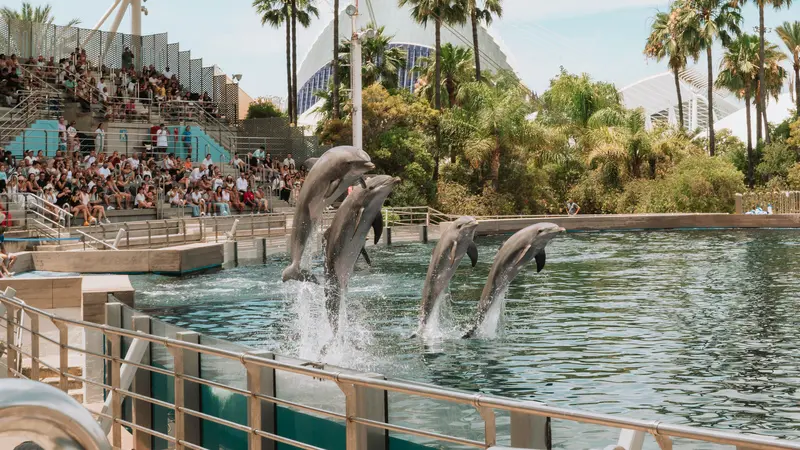
Oceanogràfic sits within Valencia’s City of Arts and Sciences area and offers an aquarium-centered visit with multiple marine environments. Its striking location is a reason to plan the day carefully: nearby museums and architecture are appealing, but purchasing entry to several institutions does not mean you can comfortably cover them all before dinner. The aquarium is suitable for visitors who enjoy moving between different habitats, with exhibits and learning opportunities for several ages. Consider current animal welfare information and any concerns you may have about marine mammal exhibits. Allow time for breaks and check whether specific presentations are included.

Nausicaá, France — an ocean-focused destination in Boulogne-sur-Mer
Nausicaá is in Boulogne-sur-Mer on the French coast and is known for major marine exhibits and educational presentation. It is not in Paris, so travelers need a separate excursion or coastal itinerary rather than adding it casually to a one-day Paris sightseeing plan. The focus on large-scale ocean habitats is a reason some families choose it as a primary attraction. Research official transport options, timed ticket rules and the walking needed inside the venue. Guests who are interested in the science of marine ecosystems may gain more from taking time at educational displays than from a rapid sequence of exhibit photographs.
Oceanário de Lisboa, Portugal — convenient Lisbon aquarium
Lisbon Oceanarium is in the Parque das Nações area and fits naturally into a Lisbon holiday. Its central display and surrounding ecosystems can engage adults as well as children, especially when visitors pause to watch behavior rather than merely identify species. A half-day or longer visit can work depending on crowding and the family’s interest. Check ticket products and current exhibitions; some experiences or activities may follow separate reservation procedures. The surrounding district offers room for walking and eating afterwards, so you need not combine it with every downtown attraction on the same day.
Acquario di Genova, Italy — historic port setting and marine exhibits
The aquarium in Genoa is part of the city’s Porto Antico waterfront and can be the central attraction of a family visit to the Ligurian capital. Its exhibits cover many aquatic species, allowing children to connect marine life with a city that has long been associated with the sea. Genoa can be a comfortable rail stop within an Italian journey, but travelers should check the final access route, especially with strollers or mobility equipment. Investigate current marine mammal care information and choose educational presentations that align with your interests. Reserve a realistic time slot instead of rushing through after a long arrival journey.
Den Blå Planet, Copenhagen — contemporary Nordic aquarium
Den Blå Planet near Copenhagen offers a Nordic option for visitors seeking a dedicated aquarium day during a city break. Its setting and exhibit design differ from the older waterfront institutions of southern Europe. Families should compare the aquarium’s transport location with where they are staying; an attraction that looks close to the airport may still need a planned connection. The weather-resistant nature of most indoor exhibits is appealing in colder seasons, but reaching the venue and any outdoor portions still requires suitable clothing. Check live ticket availability, exhibit schedules and any activities requiring reservation.
The Deep, Hull, and other European alternatives
The Deep in Hull provides another recognizable ocean-themed experience for visitors traveling through northern England. It can be a sensible regional stop, but is not interchangeable with a London city aquarium in terms of transport. Other urban SEA LIFE attractions may be convenient for a shorter visit when a destination-scale aquarium is too far away. The best choice depends on how much time your group wants to spend on marine ecology and whether the exhibit program appeals to its age range. Look at current educational content and welfare information rather than using the advertised number of species as the only comparison.
Which park fits your trip?
A visitor-friendly comparison before you buy tickets
Decide whether the main draw is a vast central tank, a series of habitat galleries, a particular educational exhibition or the convenience of an aquarium in your chosen city. Compare opening hours and the operator’s suggested visit length, but do not let an advertised duration force you to rush. A child may spend twenty minutes fascinated by one exhibit and walk quickly past another. That is an excellent aquarium visit when the day has enough flexibility. Be clear whether a temporary exhibition requires separate admission and how it fits your broader sightseeing schedule.
A simple aquarium itinerary for an unrushed day
Arrive with a small list of exhibits that interest your group, then take time to read the interpretation instead of photographing every tank. Plan a meal or snack break before fatigue builds; aquariums can involve more walking and low-light concentration than they appear to. After the main visit, pick one nearby outdoor activity to provide contrast. In a waterfront city, a walk by the harbor often helps connect the displays to real marine environments. Leave a little time for the gift shop only if it matters to your budget and children.
Reading the visitor information critically
Current aquarium maps, accessibility notices and husbandry updates are more reliable than old travel articles listing animals that may no longer be displayed. If a rare species is your main reason to visit, confirm that its gallery is open and avoid treating a sighting as guaranteed. Look for projects explaining marine ecosystem protection and responsible consumption rather than simply focusing on dramatic species. Family facilities, stroller restrictions and the experience of visitors with low vision can differ considerably among venues. Ask the operator direct questions if a particular service determines whether your visit is possible.
Practical planning advice
Match the aquarium to your route
Valencia, Lisbon, Genoa, Copenhagen and Boulogne-sur-Mer are not neighboring cities. The most efficient aquarium is often the excellent one where you already plan to spend several nights. Nausicaá may deserve a dedicated northern French excursion; Oceanogràfic fits into Valencia’s broader arts district; Lisbon Oceanarium can be a part of a metropolitan holiday. Rather than building a long trip around collecting tanks, choose marine attractions that complement local culture and transport. Aquarium visits can be wonderfully relaxing precisely because they do not require changing cities every day. One well-paced visit may be more memorable than several rushed entries.
Ethical questions about marine-life care
For each venue, look for transparent animal husbandry information, research or conservation work, environmental education and exhibits suited to the species’ needs. Some travelers prefer facilities without certain types of animal display; these preferences should be researched before buying, not discovered only upon arrival. Large exhibit tanks and impressive architecture alone cannot prove welfare quality. Accreditation and participation in recognized networks can be useful indicators but are not a substitute for thoughtful review. Ask whether the aquarium actively explains ocean threats and habitat protection or relies mainly on spectacle. The most valuable visit can change how a family thinks about the sea.
Tickets, timed entry and crowd patterns
Popular aquariums can use timed admission to manage visitors, particularly at weekends and during school holidays. An online ticket may reduce uncertainty, but check whether it can be changed if your train is late. Special exhibitions, behind-the-scenes activities and family experiences may carry separate fees or require reservations. At busy viewing windows, allow others a turn rather than expecting a perfect photograph. Families with children who tire in queues can benefit from choosing less crowded hours where the operator indicates them. The ability to stop at exhibits without feeling rushed is part of the value of the day.
What works for toddlers, schoolchildren and teenagers
Toddlers may enjoy large moving shapes and colors but tire quickly in dark corridors or crowded exhibits. Primary-school children can become fascinated by feeding ecology, coastal conservation and the difference between ocean habitats. Teenagers may enjoy deeper topics such as coral bleaching, plastic pollution and research methods. Encourage a few questions before arrival so the trip becomes a learning experience rather than a checklist of species. Staff presentations or displays can help, but do not rely on seeing particular animals at a set moment. Make time for food, toilets and fresh air before the return journey.
Accessibility, lighting and sensory considerations
Aquariums are often predominantly indoors, yet they can include low light, soundscapes, narrow viewing points, ramps, elevators and crowded exhibit tunnels. Visitors with sensory sensitivities may benefit from checking quiet periods or accessibility guidance in advance. Families with strollers should verify whether all levels can be reached without stairs; guests who use wheelchairs may want details about viewing heights. The route from a bus or rail stop may involve outdoor exposure even when the aquarium itself is indoors. A little advance research can prevent an enjoyable marine day from becoming an exhausting series of unexpected obstacles.
How to build an aquarium day around city sightseeing
In Valencia, make Oceanogràfic the main visit and enjoy the City of Arts and Sciences area without committing to every extra ticket. In Lisbon, leave time to explore Parque das Nações. In Genoa, the old harbor and nearby historic streets are natural additions after the aquarium. In northern France, account for the journey to Boulogne-sur-Mer before planning an evening activity. Choose one nearby meal or walk rather than a full second museum. This relaxed rhythm helps visitors remember individual exhibits and makes an aquarium a welcome contrast to crowded, high-speed theme-park days.
Six European aquariums, six different city itineraries
Oceanogràfic Valencia stands within the City of Arts and Sciences complex, not among the historic center’s narrow streets. A visitor can pair it with nearby modern architecture and science attractions, but an aquarium ticket should not be presumed to include neighboring venues. Nausicaá is in Boulogne-sur-Mer on France’s northern coast, not an easy museum stop in central Paris. Oceanário de Lisboa occupies the Parque das Nações district and fits comfortably into a Lisbon itinerary. The Aquarium of Genoa is on the port waterfront, while Copenhagen’s Den Blå Planet sits closer to the airport side of the city than to the old town. The Deep in Hull gives a further option in northern England.
Transport planning therefore matters as much as the size of the main tank. Families should pick the aquarium that belongs naturally to their city visit, unless there is a particular conservation exhibition worth traveling for. Even then, leave time to explore the wider destination instead of planning to arrive from a different country and depart on the same afternoon.
| Aquarium | Where it fits | What to verify |
|---|---|---|
| Oceanogràfic Valencia | City of Arts and Sciences | Timed entry and museum combinations |
| Nausicaá | Boulogne-sur-Mer and northern France | Exhibition schedule and onward transport |
| Oceanário de Lisboa | Lisbon’s Parque das Nações | Standard versus combined cable-car ticket |
| Aquarium of Genoa | Porto Antico waterfront | Admission time and extra exhibitions |
| Den Blå Planet | Copenhagen’s eastern side | Airport-area transport and exhibit availability |
| The Deep | Hull waterfront | Timed booking, parking and visit duration |
Tickets that sound similar may include different things
Oceanogràfic’s official booking offers separate aquarium admission, combinations with the science museum or Hemisfèric, and optional experiences. Choose the right product rather than buying the broadest package by default. Allow around half a day if aquarium exhibits are the priority, longer if you also book the neighboring cultural venues. Families visiting with a child may prefer a calmer single attraction over an exhausting multi-venue ticket used too quickly.
Lisbon Oceanarium’s official booking distinguishes ordinary admission from a combined cable-car offer and a flexible entry ticket. These products are useful for different visitors: a couple with a fixed itinerary may not need flexible admission, while a family uncertain about weather or timing might value it. Do not describe a cable-car ride as standard aquarium admission unless it is explicitly included in the selected ticket.
What visitors should look for inside an aquarium
A striking ocean tank can be impressive, but it is only one component of a quality visit. Pay attention to whether exhibit signs explain animal behavior, threats to marine ecosystems and the institution’s research or rescue work. Ask whether the aquarium provides transparent information about animal care and enrichment. If a special behind-the-scenes activity exists, consider its educational benefit and welfare implications rather than evaluating it simply by proximity to an animal.
For younger children, take a route with changing views and several quieter areas; one extended stop at a compelling exhibit can be better than insisting on every display. Teenagers may appreciate ecology, filtration engineering or conservation science. Visitors sensitive to darkness, sound or crowds should review sensory information and try quieter hours where possible. Many large aquariums have dim galleries and reflective tanks, so photography may be less important than simply observing.
The realistic half-day aquarium schedule
Begin with the major habitats while attention is fresh, then alternate popular areas with smaller galleries. Take a short break instead of pushing through a crowded corridor. If a feeding or educational presentation is available, check its posted schedule and whether it may change for animal-care reasons. After the aquarium, add a walk or meal near the surrounding neighborhood, not a second attraction that requires a distant cross-city sprint.
The important budget categories are admission, potential timed-entry upgrades, transport, parking, food and any paid encounter. Live ticket prices can change; direct visitors to official checkout pages instead of embedding an unqualified number. A strong aquarium day is enjoyable because the schedule gives room to observe and learn, not because it promises a sighting, presentation or animal encounter that the venue cannot guarantee.
Frequently asked questions
Is Nausicaá in Paris?
No. Nausicaá is in Boulogne-sur-Mer in northern France and needs its own transport plan.
Is Oceanogràfic part of central historic Valencia?
It is in the City of Arts and Sciences area; plan the journey from your accommodation.
Are every aquarium’s special encounters included in a standard ticket?
No. Check the operator’s current admission terms and whether the activity requires a separate booking.
Continue planning your visit
For more detailed ride and day-plan information, explore these published Visit Theme Parks guides: Nausicaá Guide, Oceanogràfic Valencia Guide, Lisbon Oceanarium Guide, Aquarium of Genoa Guide, Den Blå Planet Guide and Barcelona Aquarium Guide.
For current admission products, operational notices and restrictions, check Oceanogràfic official booking options before buying. Prices and availability can change, and optional experiences may require separate payment.