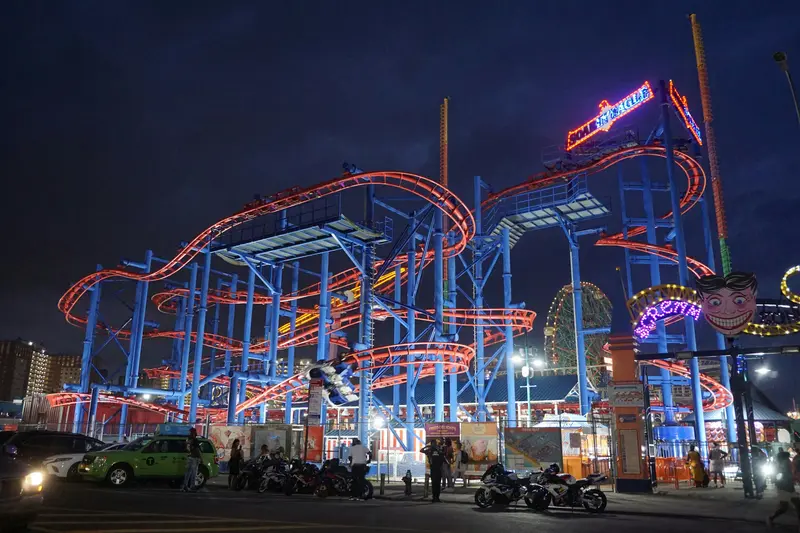
Luna Park in Coney Island is as much a piece of amusement-park history as it is a modern ride destination. The boardwalk setting, beach, games and neon atmosphere create a completely different day from a suburban theme park, while the Coney Island Cyclone and Thunderbolt give coaster fans two rides with very different connections to the area’s past.
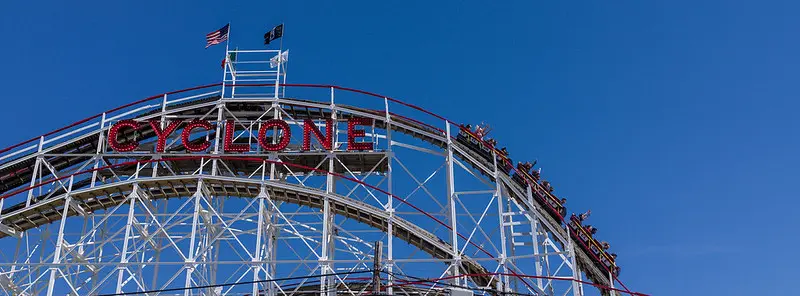
Coney Island’s amusement history reaches back to the nineteenth century, and the modern Luna Park opened in 2010 while preserving and celebrating that heritage. The Cyclone originally opened in 1927 and remains one of the world’s most recognisable wooden coasters. Thunderbolt, introduced in 2014, adds a modern steel layout with a 90-degree drop, inversions and 2,233 feet of track. The current park offers more than 50 rides, games and roller coasters.
Quick planning summary
| Location | Coney Island, Brooklyn, New York City, USA |
|---|---|
| Recommended time | half a day to 1 full day; combine it with the beach and boardwalk |
| Best for | historic amusement parks, classic coasters, New York City visitors, families and seaside atmosphere |
| Main areas | Cyclone area, Luna Park midway, boardwalk attractions, Thunderbolt zone and family rides |
Before travel, check the official Luna Park in Coney Island website for current hours, closures, ticket products and accessibility information.
What to prioritise
Coney Island Cyclone
Coney Island Cyclone is the historic 1927 wooden coaster and the defining ride of Coney Island. Ride it at least once even if you normally prefer modern coasters; the history and boardwalk setting are inseparable from the experience.
Thunderbolt
Thunderbolt is the custom steel coaster with a 90-degree drop, inversions and a compact skyline-dominating layout. It provides the modern thrill contrast to the Cyclone and belongs in the first tier of the day.
Astro Tower
Astro Tower is the rotating drop tower rising more than 130 feet over the amusement skyline. The elevated view is part of the attraction, especially on clear days.
Steeplechase and high-thrill flat rides
Steeplechase and high-thrill flat rides is modern rides that echo Coney Island’s old racing and midway traditions. Use them when coaster queues are heavy rather than crossing the park repeatedly.
B&B Carousell
B&B Carousell is the restored historic carousel originally built in the early twentieth century. It is worth doing for heritage value even for adults without young children.
Boardwalk, beach and food
Boardwalk, beach and food is the wider Coney Island experience beyond the gated ride areas. Leave time for the oceanfront because the destination loses much of its character if you treat it as an isolated amusement park.
A realistic one-day plan
Opening to late morning
Luna Park often works better as a late-morning or afternoon city excursion than a resort-style rope-drop day. If the operating calendar offers early Cyclone or Thunderbolt access, use it. Otherwise begin with the two major coasters before the boardwalk fills.
Midday
Move between family rides, games and lunch, then spend some time on the boardwalk or beach. Unlike a destination resort park, leaving time for Coney Island itself improves the experience rather than reducing attraction value.
Afternoon
Complete the thrill rides, carousel and any family priorities. If using a 2026 day wristband, compare the included rides with the number you realistically expect to do; a day pass becomes increasingly valuable as the ride count rises.
Evening
Coney Island is especially atmospheric after dark when the midway lights and boardwalk become part of the experience. Seasonal operating hours vary widely, so check the calendar rather than assuming late-night rides every day.
Tickets, reservations and premium access
The 2026 season offers different wristbands for guests 48 inches and above and for shorter guests, plus products focused on specific sections. The full Boardwalk Day Pass includes broad ride access with certain one-time inclusions. Individual ride-credit options may also be available.
Plan your visit and check admission
Check current opening dates, admission rules and ticket options on the official visitor website before travelling.
Food, water and breaks
Coney Island is one destination where eating outside the amusement park can be part of the experience. Boardwalk food, classic local institutions and park dining all compete for time, so choose one or two stops rather than turning lunch into a separate food tour.
Getting there
The subway is one of the great advantages of Luna Park. Coney Island–Stillwell Avenue connects the area directly with multiple New York City subway lines, making a car unnecessary for most visitors.
Where to stay
There is usually no reason to change hotels for Luna Park. Stay where it makes sense for the broader New York trip and make Coney Island a half-day or full-day excursion from Manhattan, Brooklyn or elsewhere in the city.
Find your place to stay
Compare hotels and other accommodation on Booking.com. Check the location, travel time and cancellation conditions before you book.
Best time to visit
The amusement season is seasonal, with 2026 wristbands valid across the public operating calendar from spring through early November. Beach weather is best in summer, but spring and autumn can be more comfortable for rides and walking.
Visiting with children
The park offers a large range of rides below extreme-thrill level, while the beach and boardwalk provide natural breaks. Height-specific wristbands make it especially important to measure children before buying.
Accessibility and motion sensitivity
Historic and modern attractions have very different boarding configurations. Review ride-specific rules if anyone has mobility, health or restraint concerns.
If you only have limited time
If the visit has to be shortened, protect Coney Island Cyclone, Thunderbolt and Astro Tower first. These three experiences represent the strongest combination of identity, current relevance and first-visit value at this theme park. Add the remaining attractions only after those priorities are secure.
A shorter visit also means being stricter about geography. Stay within one section until its important experiences are complete, skip low-priority detours and avoid a long meal in the middle of the day. For Coney Island, Brooklyn, New York City, USA, the arrival and departure logistics matter enough that cutting transport too tightly can erase much of the time saved inside.
Who should prioritise this destination?
This destination is particularly strong for historic amusement parks, classic coasters, New York City visitors, families and seaside atmosphere. Visitors whose interests match that profile can justify building a dedicated day around it. Travellers with very different priorities should compare it with nearby alternatives rather than assuming every famous attraction deserves the same amount of holiday time.
The attraction is also most rewarding when visitors accept what it is best at. At Luna Park Coney Island, trying to force a completely different style of visit usually produces unnecessary frustration. Build the day around the experiences and atmosphere that make this place distinctive.
Weather and backup strategy
Weather can change the balance of a visit even when it does not close the entire attraction. Keep indoor exhibits, sheltered areas, meals and lower-intensity experiences in reserve rather than using every backup option early. At a theme park, this flexibility is often the difference between losing an hour and simply changing the order of the day.
Check the official operating page again on the morning of the visit. Wind, storms, maintenance, animal welfare considerations and seasonal staffing can all affect individual experiences. A flexible plan should contain at least two alternative priorities near each major area so the group can move immediately when something changes.
A better first-visit strategy
Before leaving the hotel, save the digital ticket, official map and any reservation barcode offline. Mobile reception can be inconsistent inside large buildings, crowded midways and remote parking areas. A portable charger is worth carrying when live queues, schedules or mobile ordering will guide the day.
Choose three priority levels before arrival: essential, desirable and optional. If a ride, animal habitat or presentation becomes unavailable, move to the next essential experience instead of allowing one problem to derail the whole day. This is much more resilient than a minute-by-minute itinerary.
Plan around geography as much as headline attractions. Crossing a large park, zoo or aquarium several times for a small queue reduction usually loses more time than it saves once walking, stairs, children and orientation are included. Complete one logical cluster before moving on.
Schedule a proper break before the group is exhausted. A shaded meal, indoor exhibit, slow ride or seated programme can preserve enough energy to make the final hours much more productive. Waiting until someone is already tired often costs more time than resting deliberately.
Families should agree on one must-do experience per person. A child’s favourite animal, play area or family ride can matter as much to them as a record-breaking coaster matters to an adult. Protecting one priority for everyone makes compromises easier.
Photographs are most useful when they do not control the itinerary. Take the important picture when the opportunity appears, but do not stop at every viewpoint during the valuable opening period. Large destinations usually reveal the same skyline, habitat or attraction from several angles later.
Pack for comfort rather than every hypothetical problem. Good shoes, sun protection, a light rain layer, essential medication, water where permitted and a small charger solve most predictable issues. Heavy bags become increasingly annoying and can create extra locker requirements.
Check the journey home before the final hour. Public transport can become less frequent, rideshare areas may be crowded and large car parks can take time to clear. Knowing the last useful connection lets the group enjoy the final experience without repeatedly checking the clock.
Common mistakes to avoid
- Arriving exactly at the advertised opening time. Parking, security and entry procedures can put you behind the first wave.
- Ignoring height, age or access restrictions. Check them before travel and prepare nearby alternatives.
- Crossing the destination repeatedly for small changes in wait time. Geographic efficiency usually saves more real time.
- Buying premium access without checking inclusions. The most expensive option is not automatically the best fit.
- Leaving every must-do experience until late afternoon. Weather, maintenance, animal behaviour or early queue closures can remove the opportunity.
How it fits into a wider trip
For related Visit Theme Parks content, see Theme Parks archive.
Is it worth prioritising?
Luna Park is essential for Visit Theme Parks because Coney Island is part of the history of the amusement industry itself. The Cyclone, Thunderbolt and boardwalk make it unlike any standard regional park.
The best first visit is not necessarily the one with the highest ride count or the longest animal checklist. Protect the experiences that motivated the trip, keep the route logical and leave enough flexibility for weather, technical downtime, animal behaviour, children’s energy and the unexpected moments that make the destination memorable.
Leave a Reply