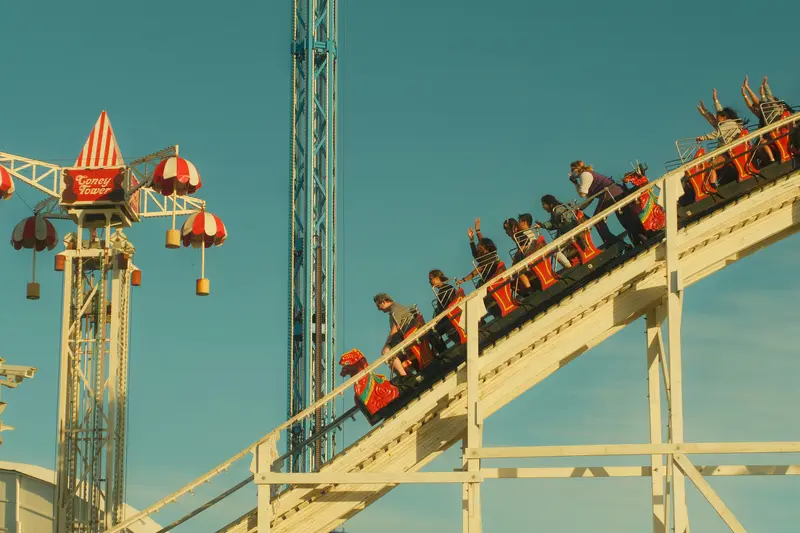
Luna Park Melbourne has been part of St Kilda since 1912 and remains one of Australia’s most recognisable amusement parks. Its famous entrance, heritage rides and seaside setting create a strong sense of place, while a modern thrill lineup keeps the visit relevant for families and teenagers.
The Great Scenic Railway has 967 metres of track, reaches about 60 km/h and is promoted as the world’s oldest continually operating roller coaster. The Ghost Train dates to 1934. In spring 2026 the renovated Luna Palace reopened with refreshed Dodgems and arcade experiences.
Quick planning summary
| Location | St Kilda, Melbourne, Victoria, Australia |
|---|---|
| Recommended time | half a day to 1 full day |
| Best for | historic amusement parks, families, classic rides and Melbourne city breaks |
Check the official website shortly before travel for the current calendar, closures, prices and accessibility information.
What to prioritise
Great Scenic Railway
Great Scenic Railway is the 1912 heritage-listed wooden coaster and essential park experience. Give it a defined place in the route instead of assuming you will fit it in automatically at the end of the visit.
Ghost Train
Ghost Train is a rare surviving classic dark ride operating since 1934. Give it a defined place in the route instead of assuming you will fit it in automatically at the end of the visit.
Supernova
Supernova is a 32-metre rotating tower ride with St Kilda views. Give it a defined place in the route instead of assuming you will fit it in automatically at the end of the visit.
Power Surge
Power Surge is a high-intensity rotating thrill ride. Give it a defined place in the route instead of assuming you will fit it in automatically at the end of the visit.
Speedy Beetle
Speedy Beetle is a spinning family coaster for younger riders. Give it a defined place in the route instead of assuming you will fit it in automatically at the end of the visit.
Luna Palace
Luna Palace is the renovated 2026 indoor arcade and Dodgems zone. Give it a defined place in the route instead of assuming you will fit it in automatically at the end of the visit.
A realistic one-day plan
Opening to late morning
If the park opens early, protect Scenic Railway and Ghost Train first. On later-opening dates, treat Luna Park as an afternoon-to-evening St Kilda experience.
Midday
Move through family rides, Luna Palace, food and carnival games. The park is compact, so there is little value in chasing tiny queue changes.
Afternoon
Complete Supernova, Power Surge, Twin Dragon and Speedy Beetle, then return to Scenic Railway if time allows. Pre-book on school holidays because popular days can sell out.
Tickets and value
Buy only the ticket product that matches the exact visit. Dated admission, ride wristbands, premium experiences, parking, event nights and combination tickets can follow different rules. Compare inclusions before paying for the most expensive option, and keep the booking confirmation available offline.
Plan your visit and check admission
Check current opening dates, admission rules and ticket options on the official visitor website before travelling.
Food, water and breaks
Eat before the main lunch rush when possible and use the meal as a genuine recovery period. Carry water where permitted and plan a shorter snack break later rather than waiting until children or adults are already tired.
Getting there
Plan the complete journey to St Kilda, Melbourne, Victoria, Australia, including the final entrance, parking area or public-transport connection. A map distance alone rarely reflects traffic, security, walking from the car park or the time needed to reach the actual gate.
Where to stay
Choose accommodation around the wider trip rather than the attraction alone unless an early start, late event or two-day visit genuinely benefits from staying nearby. Reducing the morning transfer can be especially valuable for families.
Find your place to stay
Compare hotels and other accommodation on Booking.com. Check the location, travel time and cancellation conditions before you book.
Best time to visit
The park is commonly open weekends, public holidays and daily during school-holiday periods rather than every ordinary weekday. Weather can also affect operating hours.
Visiting with children
Measure children before travel when rides are important and identify an alternative beside every attraction they cannot use. In zoos and educational parks, build play, food and toilet breaks into the route before fatigue becomes obvious.
Accessibility
Individual rides, animal houses and outdoor paths can have very different accessibility conditions. Review the current official guidance before arrival if anyone has mobility, sensory or medical requirements; premium queue access never overrides safety eligibility.
If you only have limited time
If time is short, protect Great Scenic Railway, Ghost Train and Supernova first. Those experiences capture the strongest combination of identity and first-visit value. Add lower-priority experiences only after the essentials are secure.
A better first-visit strategy
Before leaving the hotel, save the digital ticket, official map and any reservation barcode offline. A portable charger is useful when live schedules, navigation or mobile tickets guide the day, and screenshots prevent a weak signal from becoming a practical problem.
Choose three levels of priority before arrival: essential, desirable and optional. If an attraction, animal habitat or show becomes unavailable, move immediately to the next essential experience instead of allowing one closure to control the whole visit.
Plan around geography as much as headline experiences. Crossing a large attraction repeatedly for small changes in queue time or animal activity usually saves less than expected once walking, stairs, children and orientation are included.
Schedule a proper break before everyone is exhausted. A seated meal, indoor exhibit, gentle ride, playground or show can preserve enough energy to make the late afternoon far more productive.
Families should agree on one must-do experience per person. A child’s favourite play area or animal can matter as much to them as a famous coaster matters to an adult. Protecting one priority for everyone makes compromises easier.
Review the official operating page on the morning of the visit. Seasonal staffing, maintenance, weather and animal-welfare decisions can change individual experiences after the trip has already been booked.
Pack for comfort rather than every hypothetical problem. Good shoes, sun protection, a light rain layer, essential medication and water where permitted solve most predictable issues. Heavy bags become increasingly frustrating as the day continues.
Check the return journey before the final hour. Public transport can become less frequent, rideshare pickup areas may be crowded and large parking areas can take time to clear. Knowing the final connection lets the group enjoy the last experience without repeatedly checking the clock.
Separate experiences that are easy to repeat from those that are difficult to recover. A normal ride may become easier later if the queue falls, while a timed show, keeper talk, guided activity or limited-capacity experience can disappear once its slot has passed.
If you are combining this destination with another major attraction on the same day, be conservative. Transport, meals, parking and entry procedures consume more time than a map suggests. Two strong experiences are normally better than three rushed ones.
Visitors who care about photography should keep one flexible return window near the end of the day. Light, animal position and crowd density can improve later, giving you a second chance without sacrificing the most valuable opening hours.
International visitors should save the attraction name and address in a form that can be shown directly to a taxi driver, hotel desk or transport employee. This is especially useful at complexes with several entrances.
Use the official map to identify first aid, lockers, restrooms and the nearest alternative to each major priority. Knowing these locations before they are needed prevents small practical problems from turning into long detours.
Think about the energy curve of the group as carefully as the attraction list. Opening hours are best for hard priorities, midday is often better for food and slower experiences, and the final hours are ideal for repeats if everyone still has energy.
Do not assume the most famous experience is automatically the best choice for every traveller. Motion sensitivity, walking tolerance, children’s confidence and personal interests can make a lower-profile attraction far more valuable.
Leave one or two minor experiences unfinished if completing them would turn the final hour into a race. A relaxed ending usually creates a stronger memory of the destination than an exhausted checklist.
Common mistakes to avoid
- Arriving exactly at opening. Entry procedures can put you behind the first wave.
- Ignoring height, age or access restrictions. Check them before travel.
- Crossing the destination repeatedly. Geographic efficiency usually saves more time.
- Buying every add-on automatically. Pay only when an upgrade solves a real problem.
- Leaving every must-do until late. Weather, maintenance, animal behaviour or early closures can remove the opportunity.
How it fits into a wider trip
For related planning, see the Theme Parks archive.
Is it worth prioritising?
The Scenic Railway and Ghost Train preserve living amusement history inside a modern seaside park, making Luna Park Melbourne essential for any serious global amusement-park site.
The strongest first visit is not necessarily the one with the highest ride count or the longest animal checklist. Protect the experiences that explain why this destination is distinctive, keep the route logical and leave enough flexibility for the unexpected moments that make a day memorable.
How to keep the day flexible
A useful way to protect the quality of the day is to decide in advance what you are willing to skip. Large attractions create pressure to complete everything, but that often produces unnecessary backtracking and rushed meals. Mark two or three experiences as optional before arrival. If the park or zoo is busier than expected, those are the first things to drop without affecting the core value of the visit.
Also think about weather in terms of order, not only cancellation. Light rain may improve animal activity or shorten outdoor queues, while strong heat can make indoor exhibits, shaded play and slower attractions more valuable at midday. Keep one flexible weatherproof block available for later rather than using every indoor option during the first hour.
For families, the final hour should be simpler than the first. Avoid introducing a completely new distant area when children are already tired. Finish near an exit, food stop or favourite repeat whenever possible. This reduces end-of-day stress and makes transport, shopping and the journey back to the hotel easier.
Leave a Reply